Recent POST






Getting sick while pregnant isn’t just uncomfortable-it can be dangerous for you and your baby. Your immune system changes naturally to protect the growing fetus, which leaves you more vulnerable to infections like influenza, pertussis (whooping cough), and respiratory syncytial virus (RSV). The good news? You don’t have to face these risks alone. Modern medicine offers specific vaccines that are proven safe during pregnancy, providing a shield of protection for both you and your newborn before they can receive their own shots.
If you’ve heard conflicting advice or feel hesitant about needles in the nursery, you’re not alone. Many parents worry about ingredients, timing, or potential side effects. But extensive data from millions of pregnancies shows that recommended vaccines save lives. This guide breaks down exactly which shots you need, when to get them, and why the timing matters so much for your baby’s health.
Why Vaccination Matters During Pregnancy
The primary goal of vaccinating during pregnancy is twofold: protecting the mother and creating a "bubble" of immunity around the newborn. Newborns are too young to receive most vaccines until they are 2 months old. In those first few months, their immune systems are still developing, making them highly susceptible to severe complications from common viruses.
When you receive a vaccine, your body produces antibodies. These antibodies don’t just stay in your blood; they cross the placenta and enter your baby’s circulation. Research published in medical databases shows that maternal vaccination results in antibody transfer ratios ranging from 0.62 to 0.82. This means your baby is born with a head start on fighting off diseases like whooping cough and the flu. It’s a form of passive immunity that bridges the gap until the infant can build their own defenses.
Additionally, pregnant individuals experience physiological changes-such as increased heart rate and lung capacity-that make respiratory illnesses like the flu more likely to lead to hospitalization. Vaccination reduces this risk significantly, ensuring a smoother third trimester and delivery.
The Essential Timeline: Which Vaccine When?
Not all vaccines are created equal, and timing is critical. Some vaccines are needed every season, while others are required once per pregnancy. Here is the breakdown of the major immunizations recommended by the Centers for Disease Control and Prevention (CDC) and the American College of Obstetricians and Gynecologists (ACOG).
Tdap Vaccine (Tetanus, Diphtheria, Pertussis)
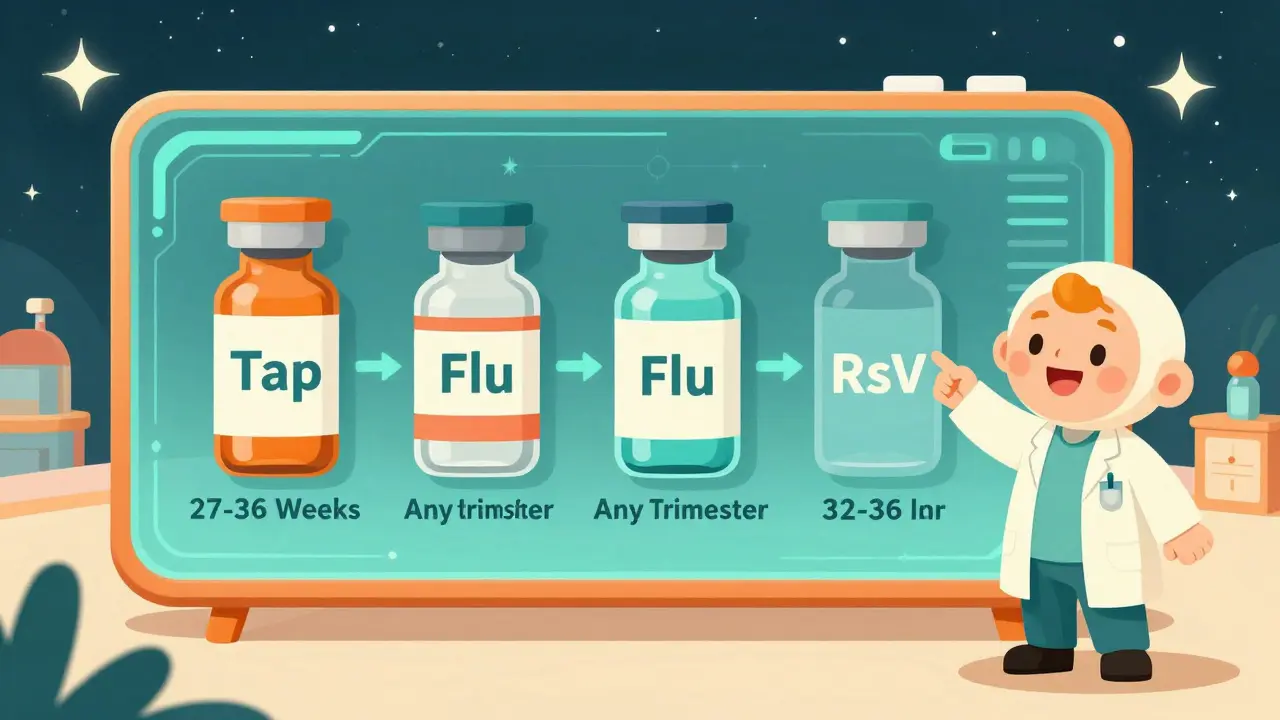
Tdap is a combination vaccine that protects against tetanus, diphtheria, and whooping cough. Whooping cough is particularly dangerous for infants, causing life-threatening breathing pauses. The CDC recommends receiving Tdap between 27 and 36 weeks of gestation during every pregnancy, regardless of your previous vaccination history.
Why this window? Antibody levels peak shortly after vaccination and then decline. By waiting until the late second or early third trimester, you ensure that antibody concentrations are at their highest when the baby is born. Studies show that administering Tdap earlier than 20 weeks results in 37% lower cord blood antibody concentrations. Ideally, aim for 27-30 weeks to maximize this transfer.
Influenza (Flu) Vaccine
You should get the flu shot during any trimester, but it is most effective if received before flu season peaks. In the Northern Hemisphere, this typically means getting vaccinated between September and October. The flu vaccine used during pregnancy is an inactivated version, meaning it cannot give you the flu. Data from the 2020-21 season showed that vaccinated pregnant individuals had significantly lower rates of hospitalization compared to unvaccinated peers.
RSV Vaccine (Respiratory Syncytial Virus)
A newer addition to the prenatal checklist is the RSV vaccine. The FDA approved Abrysvo by Pfizer in May 2023. It is recommended for administration between 32 and 36 weeks of pregnancy, specifically during the months of September through January. This timing aligns with the peak RSV season in many regions. Clinical trials demonstrated that this vaccine reduced medically attended RSV-associated lower respiratory tract infections in infants by over 80% within the first three months of life.
COVID-19 mRNA Vaccines
mRNA vaccines, such as those developed by Pfizer-BioNTech and Moderna, are also recommended during pregnancy. They provide robust protection against severe disease. CDC data indicated that the vast majority of pregnant individuals hospitalized with severe COVID-19 were unvaccinated. Updated monovalent formulations should be used as they become available each year to target circulating variants.
Vaccines to Avoid: Live Attenuated Shots
While most vaccines are safe, there is a strict rule regarding live attenuated vaccines. These contain weakened forms of the live virus. Although rare, there is a theoretical risk that these could harm the developing fetus. Therefore, the following vaccines are contraindicated during pregnancy:
- MMR (Measles, Mumps, Rubella)
- Varicella (Chickenpox)
- Live intranasal influenza vaccine (the nasal spray)
If you discover you are pregnant after receiving one of these vaccines, do not panic. Current guidelines state that the risk is negligible, and termination is not recommended. However, you should wait at least 28 days after receiving these vaccines before trying to conceive. Always inform your healthcare provider if you have recently traveled to areas where measles or chickenpox are common.
| Vaccine | Recommended Timing | Key Benefit for Baby | Type |
|---|---|---|---|
| Tdap | 27-36 weeks (Every pregnancy) | Protection against whooping cough | Inactivated |
| Influenza | Any trimester (Best in Sept/Oct) | Reduces flu severity and transmission | Inactivated |
| RSV (Abrysvo) | 32-36 weeks (Sept-Jan) | Prevents severe RSV infection | Adjuvanted Protein Subunit |
| COVID-19 | As soon as eligible | Protects against severe SARS-CoV-2 | mRNA |
Safety Profile and Side Effects
Safety is the top concern for any expectant parent. The data supporting pregnancy vaccines is extensive. Over 1.5 million pregnant individuals in the U.S. have been vaccinated against influenza, and over 1.2 million against pertussis, with no identified safety signals linked to adverse birth outcomes. The CDC’s v-safe pregnancy registry monitored nearly 140,000 pregnant individuals who received COVID-19 vaccines, finding that 84.6% experienced no pregnancy complications.
What can you expect in terms of side effects? Most reactions are mild and short-lived. Common symptoms include:
- Pain, redness, or swelling at the injection site (reported by nearly 70% of recipients)
- Mild headache or fatigue
- Sore arm lasting 1-2 days

Addressing Hesitancy and Myths
Hesitancy often stems from misinformation. A survey by the March of Dimes found that 41.2% of vaccine-hesitant pregnant individuals cited "concerns about effects on baby" as their primary barrier. Let’s address two common myths:
Myth: Vaccines cause autism or developmental issues. Fact: Numerous large-scale studies have debunked this link. There is no scientific evidence connecting any recommended vaccine to autism or developmental delays.
Myth: If I was vaccinated before, I don’t need it again. Fact: Antibody levels wane over time. For Tdap, specifically, the recommendation is to receive it during each pregnancy because the amount of antibody transferred to the current fetus depends on how recently you were vaccinated. Previous doses do not guarantee sufficient protection for the new baby.
Practical Tips for Getting Vaccinated
Integrating vaccines into your prenatal care doesn’t have to be complicated. Here is how to make it smooth:
- Ask at your first prenatal visit: Discuss your vaccination history with your OB-GYN or midwife. Ask if you are up to date on Tdap and flu shots.
- Mark your calendar: Note the 27-week mark for Tdap and the start of flu season (September) for the flu shot. If RSV season coincides with your pregnancy, discuss the 32-36 week window for the RSV vaccine.
- Get it done anywhere: You don’t need to go to your doctor’s office for every shot. Pharmacies, community clinics, and even some grocery stores offer flu and Tdap vaccines. Ensure the provider records the dose in your medical chart.
- Bring proof to your pediatrician: After delivery, tell your baby’s doctor which vaccines you received. This helps them tailor the infant’s vaccination schedule, though standard protocols usually apply regardless.
Remember, vaccination is one of the most impactful steps you can take to protect your child’s health before they even take their first breath. By staying informed and following the recommended timeline, you are giving your baby the best possible start.
Can the flu shot give my baby the flu?
No. The flu vaccine given during pregnancy is an inactivated vaccine, meaning it contains killed virus particles that cannot cause infection. It stimulates your immune system to produce antibodies without exposing you or your baby to the actual disease.
Is it safe to get the Tdap vaccine if I already had it before?
Yes. The CDC recommends receiving Tdap during every pregnancy, regardless of prior vaccination history. This ensures that antibody levels are high enough to transfer maximum protection to the newborn, as immunity wanes over time.
What if I miss the 27-36 week window for Tdap?
If you miss the optimal window, you should still get the vaccine as soon as possible, even in the postpartum period. While the antibody transfer to the baby will be less effective if given later, it still protects you and helps prevent you from passing the bacteria to your baby through close contact.
Do I need the RSV vaccine if my baby was born prematurely?
The RSV vaccine is administered to the mother between 32-36 weeks to protect the infant. If your baby is born prematurely, they may still benefit from maternal antibodies if you were vaccinated. Additionally, premature infants may be eligible for direct monoclonal antibody treatments (like nirsevimab) after birth, so consult your pediatrician for a tailored plan.
Are there any costs associated with these vaccines?
In the United States, most insurance plans cover recommended pregnancy vaccines, including Tdap and flu shots, with no copay under the Affordable Care Act. The Vaccines for Children (VFC) program also provides free vaccines for eligible uninsured or underinsured individuals. Check with your provider or pharmacy for specific coverage details.