Recent POST
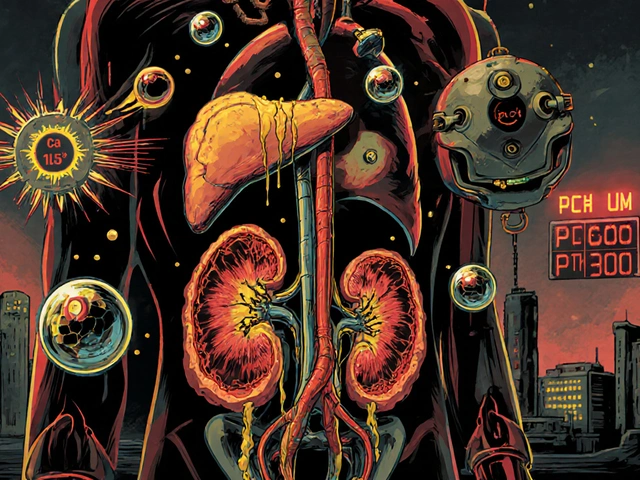





Imagine waking up with a red, swollen bump on your leg that looks like a spider bite. You ignore it for a few days, assuming it will heal on its own. Instead, it grows larger, becomes painful, and you develop a fever. This isn't just a simple skin irritation; it could be MRSA, or Methicillin-Resistant Staphylococcus aureus. For decades, we thought of MRSA as a hospital-only problem. If you weren't in an ICU or recovering from major surgery, you were safe. That assumption is dangerously outdated.
Today, the line between hospital-acquired and community-acquired MRSA is blurring. Healthy people are getting sick with strains that were once confined to medical facilities, while hospitals are struggling with aggressive community strains entering their doors. Understanding the difference between these two types-and how they spread-is no longer just academic trivia. It’s essential for protecting yourself and your family.
The Two Faces of MRSA: CA-MRSA vs. HA-MRSA
To understand the threat, we need to look at what makes these bacteria tick. Both types belong to the Staphylococcus aureus family, but they have evolved differently based on where they live. The key difference lies in their genetic makeup, specifically a segment called SCCmec (staphylococcal cassette chromosome mec).
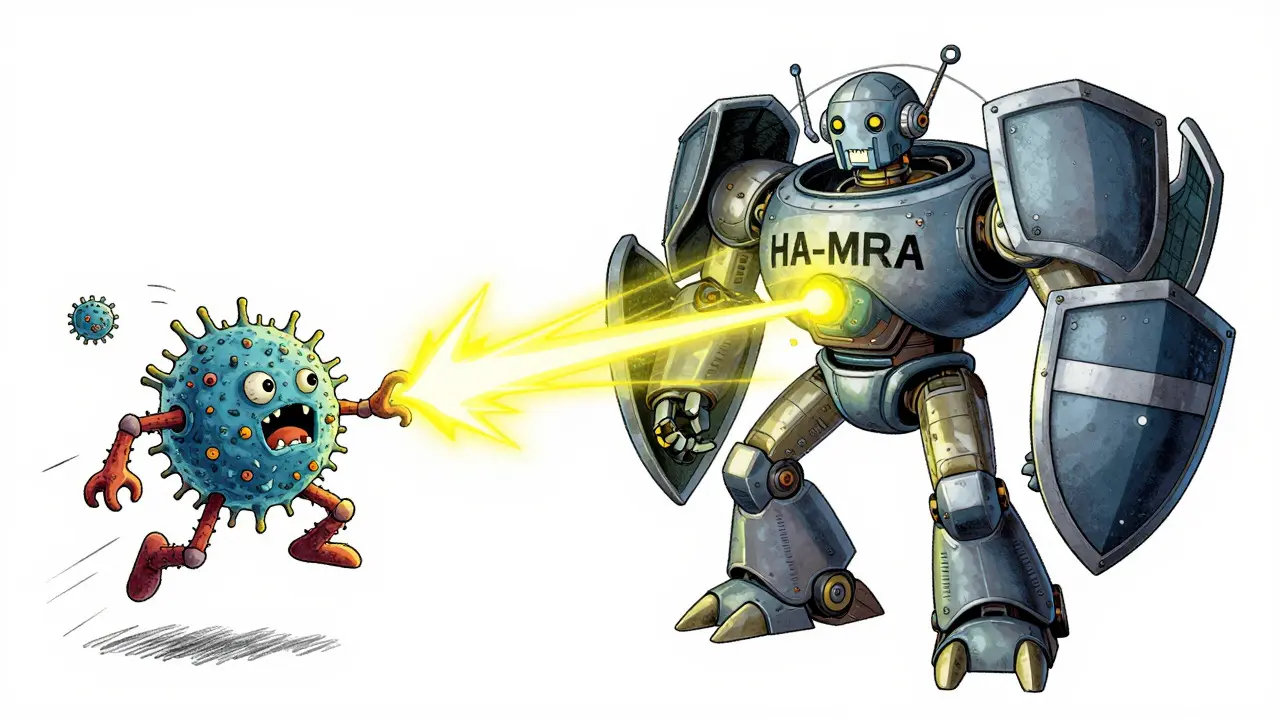
Community-associated MRSA (CA-MRSA) typically carries smaller SCCmec elements (types IV and V). These smaller genetic packages mean fewer antibiotic resistances but often higher virulence. Think of CA-MRSA as a lightweight fighter: fast, aggressive, and dangerous to healthy hosts. It frequently produces a toxin called Panton-Valentine leukocidin (PVL), which destroys white blood cells and leads to severe skin abscesses and necrotizing pneumonia.
In contrast, Hospital-associated MRSA (HA-MRSA) carries larger SCCmec elements (types I-III). This makes them bulkier and more resistant to a wide array of antibiotics, including erythromycin, clindamycin, and fluoroquinolones. HA-MRSA is like a heavily armored tank: slower to spread among healthy people but nearly impossible to kill once established in a vulnerable patient. Studies show that while 96% of CA-MRSA isolates remain susceptible to clindamycin, only a fraction of HA-MRSA strains do.
| Feature | CA-MRSA (Community) | HA-MRSA (Hospital) |
|---|---|---|
| Genetic Type (SCCmec) | Types IV and V (Smaller) | Types I-III (Larger) |
| Antibiotic Resistance | Limited (often sensitive to clindamycin/TMP-SMX) | Broad (resistant to multiple classes) |
| Virulence Factor | PVL toxin common | PVL toxin rare |
| Typical Patient | Healthy individuals, athletes, children | Elderly, immunocompromised, post-surgery |
| Hospital Stay Duration | Short (median 1.5 days) | Long (median 13 days) |
How MRSA Spreads: Breaking Down the Barriers
Transmission dynamics have shifted dramatically over the last two decades. Historically, MRSA stayed within hospital walls. Today, it moves freely between the community and healthcare settings. This bidirectional flow creates a complex web of risk that traditional infection control measures struggle to contain.
In the community, MRSA thrives in environments with frequent skin-to-skin contact and shared equipment. Gyms, locker rooms, and military barracks are hotspots. Research indicates that people living in crowded conditions face significantly higher risks: military personnel have a 12.3x higher risk, those in homeless shelters face an 8.7x increase, and prison inmates see a 14.9x spike in transmission rates. Injecting drug users also represent a significant reservoir due to needle sharing and poor injection site hygiene.
But here’s the twist: it’s not just community strains moving into hospitals. Hospital strains are leaking out too. A Canadian study found that 27.5% of community-associated infections were actually caused by HA-MRSA strains. Conversely, 27.6% of hospital-onset infections were driven by CA-MRSA. This means a healthy person can bring a hospital-grade superbug into a clinic, and a patient can leave the hospital carrying a community strain that spreads to others.
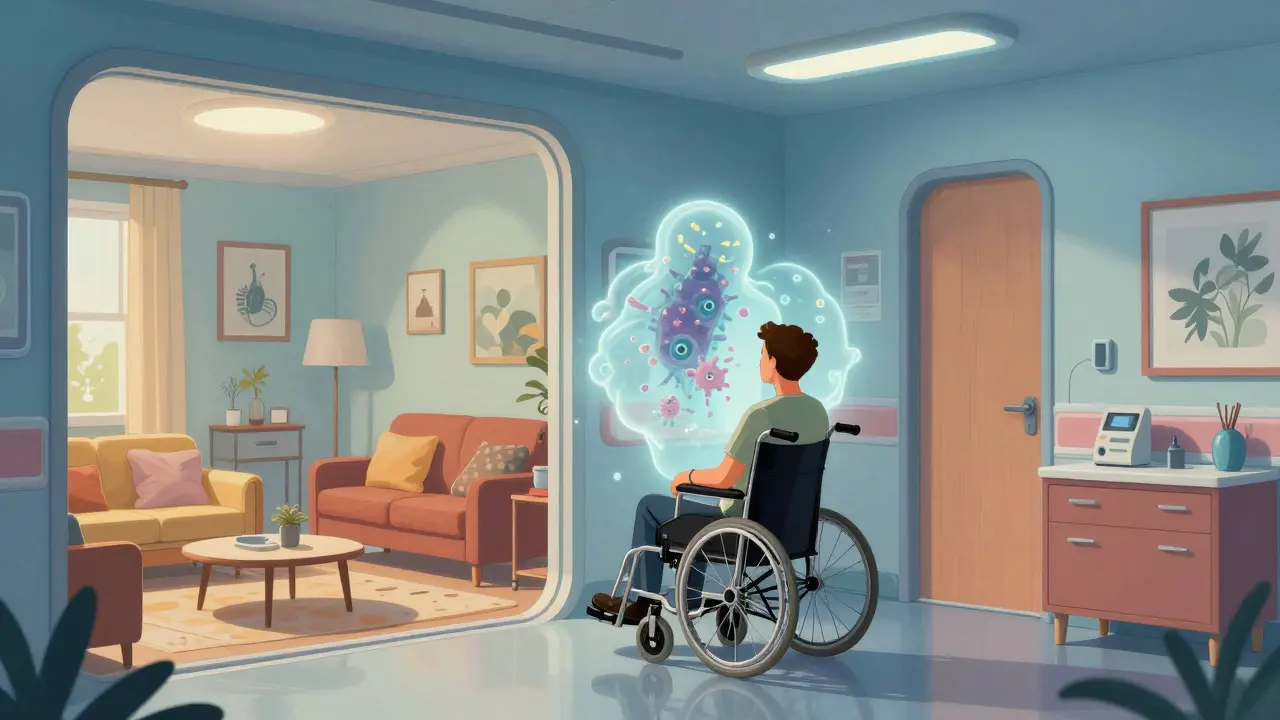
The average hospital stay is now 4-5 days, which is much shorter than the time it takes for MRSA to clear from the body (several hundred days). Patients leave the hospital still colonized with the bacteria, acting as silent carriers who reintroduce the pathogen into their homes and workplaces.
Recognizing the Symptoms Early
Catching MRSA early can prevent serious complications. The most common presentation for both CA-MRSA and HA-MRSA is skin and soft tissue infection. However, the severity and speed of progression differ.
- Skin Abscesses: Look for boils, pimples, or cysts that are red, swollen, painful, and warm to the touch. They often contain pus or fluid.
- Rapid Progression: CA-MRSA infections can worsen quickly. A small bump can turn into a large, deep abscess within 24-48 hours.
- Systemic Signs: Fever, chills, and fatigue suggest the infection has entered the bloodstream or lungs. This is a medical emergency.
- Necrotizing Pneumonia: Particularly associated with PVL-positive CA-MRSA, this causes rapid lung damage and requires immediate intensive care.
If you suspect a staph infection, don’t squeeze it. Squeezing can push the bacteria deeper into the tissue or into the bloodstream. Cover the wound with a clean, dry bandage and seek medical attention if it doesn’t improve within a day or two.
Treatment Strategies: What Works?
Treating MRSA depends heavily on whether you’re dealing with a community or hospital strain, though the lines are blurring. For mild skin infections caused by CA-MRSA, incision and drainage (I&D) alone may be sufficient. Antibiotics are not always necessary if the abscess is drained properly.
When antibiotics are required, the choice matters. Because CA-MRSA retains susceptibility to certain drugs, doctors often prescribe:
- Clindamycin: Effective against 96% of CA-MRSA isolates.
- Trimethoprim-sulfamethoxazole (TMP-SMX): Shows 92% susceptibility rates.
- Tetracyclines (e.g., Doxycycline): About 89% effective against CA-MRSA.
HA-MRSA infections are trickier. Due to multi-drug resistance, oral options are limited. Intravenous antibiotics like vancomycin or daptomycin are often required for severe cases. The challenge arises when hybrid strains emerge-combining the virulence of CA-MRSA with the resistance of HA-MRSA. Empirical therapy (starting treatment before lab results are back) must account for this uncertainty, often leading to broader antibiotic use that fuels further resistance.
Prevention: Hygiene Beyond the Hospital
Since MRSA lives on our skin and in our noses, prevention starts with personal hygiene. The CDC notes that about 1.3% of community-dwelling individuals are colonized with MRSA, meaning they carry the bacteria without showing symptoms. Colonized individuals can spread the bacteria to others even if they feel fine.
- Hand Washing: Wash hands frequently with soap and water, especially after touching wounds or being in public spaces. Alcohol-based sanitizers work well too.
- Wound Care: Keep cuts and scrapes clean and covered until healed. Change bandages daily.
- Avoid Sharing Personal Items: Don’t share towels, razors, clothing, or athletic gear. These items can harbor bacteria.
- Environmental Cleaning: Disinfect surfaces in gyms, locker rooms, and homes regularly. Use EPA-approved disinfectants effective against MRSA.
- Decolonization Protocols: For recurrent infections, doctors may recommend nasal mupirocin ointment and chlorhexidine body washes to reduce bacterial load.
In healthcare settings, contact precautions (gloves and gowns) remain standard. However, given the influx of community strains, some experts argue for universal screening and decolonization protocols for all admitted patients, regardless of history.
The Future of MRSA Control
We are facing a fragile equilibrium. Mathematical models suggest that without intervention, highly transmissible community strains could eventually dominate hospital settings. The USA300 clone, which accounts for roughly 70% of CA-MRSA infections in the US, exemplifies this trend due to its high virulence and ease of spread.
Integrated surveillance is the key. We need to monitor MRSA transmission across the entire healthcare-community continuum rather than treating these as separate ecosystems. This includes tracking genetic changes in real-time and adjusting antibiotic stewardship programs to minimize unnecessary drug use that drives resistance.
For individuals, vigilance is your best defense. Recognize the signs of infection early, practice rigorous hygiene, and avoid unnecessary antibiotic use. MRSA is resilient, but it is not invincible. By understanding how it spreads and evolves, we can stay one step ahead.
What is the main difference between CA-MRSA and HA-MRSA?
The primary differences lie in genetics and resistance. CA-MRSA usually has smaller SCCmec elements (IV/V), making it less resistant to antibiotics but more virulent, often producing the PVL toxin. HA-MRSA has larger SCCmec elements (I-III), resulting in broad resistance to many antibiotic classes but lower virulence in healthy hosts. CA-MRSA affects healthy people in the community, while HA-MRSA typically impacts hospitalized or immunocompromised patients.
Can you get MRSA from a gym or locker room?
Yes. Gyms and locker rooms are common sites for CA-MRSA transmission due to skin-to-skin contact and shared equipment like mats, towels, and benches. Bacteria can survive on surfaces for extended periods. Always shower after working out, cover any open wounds, and avoid sharing personal items like razors or towels.
How long does it take to cure an MRSA infection?
Treatment duration varies by severity. Mild skin infections treated with incision and drainage may heal within a week. Antibiotic courses typically last 7-14 days. Severe infections requiring IV antibiotics or hospitalization can take weeks to resolve. Complete clearance of colonization from the body can take several months, which is why reinfection is possible.
Is MRSA contagious through the air?
Generally, no. MRSA spreads primarily through direct contact with infected skin or contaminated objects (fomites). Airborne transmission is rare and usually associated with specific procedures like suctioning intubated patients in hospitals. Standard hygiene practices are effective in preventing spread.
Why is MRSA becoming harder to treat?
MRSA evolves rapidly. Overuse of antibiotics selects for resistant strains. Additionally, the emergence of hybrid strains that combine the high virulence of community strains with the broad resistance of hospital strains complicates treatment. Doctors often have to guess the right antibiotic initially, delaying effective care.

Dennis Leeftink
people act like this is new info. it's not.
you wash your hands or you don't. simple as that.
stop blaming the gym for your own filth.

Traci Bobbitt
i mean yeah but honestly the article misses a huge point about how fast these strains mutate in shared spaces like college dorms.
my roommate got a staph infection from a shared towel last year and it took weeks to clear up even with antibiotics.
it’s scary how normal it has become to just shrug off skin infections until they get bad.

Sansaray Jones
just keep your wounds covered really
no need to panic over everything

Michelle Alavaski
The narrative presented herein is fundamentally flawed, as it ignores the deliberate introduction of resistant strains by pharmaceutical entities seeking to prolong dependency on ineffective treatments. The distinction between community and hospital acquisition is merely a semantic construct designed to obscure the systemic failure of public health infrastructure which has been systematically dismantled to serve corporate interests rather than human welfare. One must question why decolonization protocols are rarely offered proactively if the risk is indeed so pervasive among the general populace, suggesting a selective application of medical advice based on socioeconomic status rather than biological necessity.

Veronica Agbanyim
It is truly disheartening to see how negligence has become the norm in our daily interactions with shared environments. We have lost a sense of communal responsibility, treating hygiene as an optional luxury rather than a moral imperative towards our neighbors. When we share equipment without cleaning it, we are essentially gambling with another person’s health for the sake of convenience. This lack of consideration reflects a broader societal decay where individual comfort outweighs collective well-being. We must demand better standards from gyms and healthcare facilities alike, holding them accountable for the spread of preventable diseases. It is not enough to simply advise individuals to be careful; the structures we inhabit must be safe by design. Until then, we remain complicit in the suffering caused by these superbugs through our apathy.

jackie healey
That is a very interesting perspective! However, I would gently suggest that while systemic issues exist, personal agency plays a significant role in prevention, especially regarding wound care. For those dealing with recurrent infections, I highly recommend discussing nasal mupirocin with your doctor, as it can significantly reduce bacterial load. Also, using chlorhexidine washes twice a week has shown great promise in studies for reducing transmission rates in households. It is important to stay proactive rather than reactive!

Morikeoluwa Ayodeji
Hey everyone! Great discussion here. I want to add that in many communities, access to clean water and proper sanitation is still a major hurdle. So while handwashing is key, we also need to address the root causes of poor hygiene infrastructure. Stay strong and keep each other informed! Knowledge is power when it comes to fighting these bugs.

Fenton Quinn
The blurring lines between CA-MRSA and HA-MRSA suggest a convergence of evolutionary pressures. Perhaps we should view this not as two distinct entities but as a single adaptive strategy responding to antibiotic selection pressure. What does this imply for future drug development?

Lilith Stepanyan
Let's look at the data again because most people ignore the statistical significance of the SCCmec types. The article claims CA-MRSA is less resistant but more virulent, yet recent isolates show hybrid resistance patterns that defy this binary classification. It is lazy journalism to simplify complex genomic variations into neat categories for mass consumption. The reality is that genetic recombination events are frequent and unpredictable, making any static model of transmission obsolete within months. We need dynamic surveillance models, not static educational pamphlets that give a false sense of security. The PVL toxin presence is also not a reliable marker for severity as previously thought, given the variability in host immune response.
Dennis Leeftink
too much reading.
Write a comment