Recent POST


Every year, hospitals and pharmacies throw away millions of dollars worth of expired medications. Not because they’re careless, but because manually checking expiration dates on hundreds of bottles, vials, and blister packs is slow, error-prone, and exhausting. One wrong date missed can mean a patient gets a drug that no longer works-or worse, one that’s become unsafe. The good news? You don’t have to rely on paper logs or memory anymore. Technology now makes it possible to track medication expiration dates automatically, accurately, and in real time.
Why Tracking Expiration Dates Matters
Expired medications aren’t just useless-they can be dangerous. Studies show that some drugs lose potency over time, meaning a patient might not get the full dose they need. Others, especially liquid antibiotics or insulin, can break down into harmful compounds. In emergency rooms or nursing homes, where staff are juggling dozens of patients, a single expired pill can slip through the cracks. That’s why regulatory bodies like the FDA and DEA require strict tracking, especially for controlled substances. But compliance isn’t just about avoiding fines. It’s about keeping people safe.RFID Systems: The Fastest Way to Scan Hundreds of Medications at Once
Imagine walking into a pharmacy cabinet, waving a scanner over a tray of 50 medications, and instantly seeing which ones expire in the next 48 hours. That’s what RFID (Radio Frequency Identification) technology does. Small tags are attached to each medication package during manufacturing or by the pharmacy. These tags contain a unique code linked to the drug name, lot number, and expiration date. When you place the tray on a reader, all 50 items are scanned simultaneously-no barcode scanning, no manual entry. Systems like KitCheck, used in over 900 hospitals, cut inventory checks from hours to minutes. Texas Children’s Hospital reported saving hundreds of hours annually just managing their 784 high-value drugs, each costing over $100. The system flags anything expiring in two days or less and blocks it from being dispensed. Accuracy jumps from 65-75% with manual checks to nearly 100%. And because RFID works even when packages are stacked or in refrigerators, it’s ideal for crash carts, operating rooms, and emergency kits.eMAR: Automated Tracking for Long-Term Care and Pharmacies
If you’re managing medications in a nursing home, IDD (Intellectual and Developmental Disabilities) facility, or community pharmacy, eMAR (Electronic Medication Administration Record) is your best bet. Unlike RFID, which tracks physical inventory, eMAR focuses on the medication journey-from when it’s ordered, to when it’s given to the patient. Platforms like eVero connect directly to pharmacy systems and automatically update expiration dates. When a bottle arrives, the system logs its expiration. When a nurse administers the drug, they scan the patient’s wristband and the medication. The system checks if it’s expired, and if so, it won’t allow the dose to be recorded. These systems also handle recalls. If the FDA issues a recall for a specific lot, eMAR instantly identifies every patient who received that batch. No more calling each nurse or digging through paper records. For facilities serving vulnerable populations, this isn’t just convenient-it’s life-saving.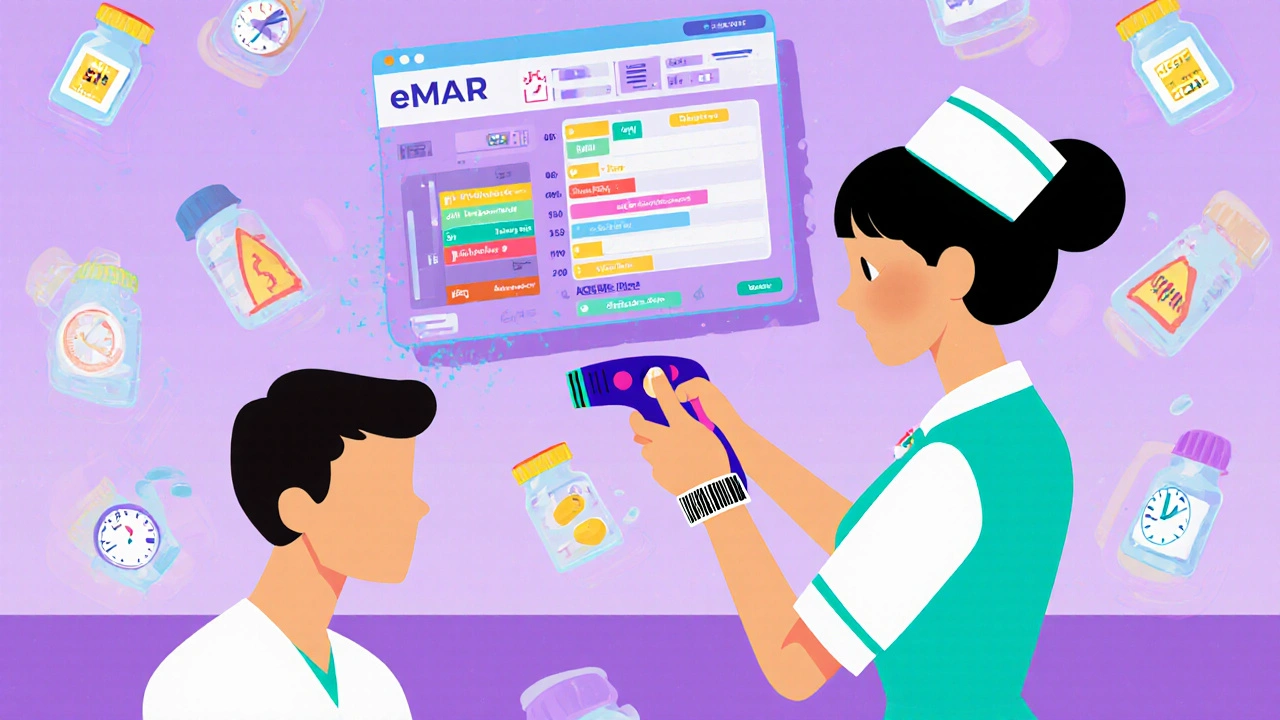
Automated Dispensing Cabinets (ADCs): Smart Storage That Knows What’s Inside
Closed-door pharmacies and hospital units use Automated Dispensing Cabinets (ADCs) to store controlled substances and high-risk meds. These aren’t just locked boxes-they’re intelligent systems. Every time a clinician opens a drawer to grab a pill, the cabinet logs the drug, the lot number, the expiration date, and who took it. If a medication expires while sitting in the cabinet, the system locks it out. No access. No override. Some ADCs even alert pharmacy staff when stock is running low or when an item is nearing expiration. TouchPoint Medical reports that pharmacists using ADCs reduce medication errors by up to 40%. The system also simplifies audits. Instead of manually counting every vial at month-end, staff run a report that shows exactly what’s in stock, what’s expired, and what needs restocking. For DEA-regulated drugs like opioids, this level of control isn’t optional-it’s mandatory.Mobile Apps for Emergency Services and Small Clinics
Not every organization can afford a $150,000 RFID setup. Smaller EMS teams, home care providers, and rural clinics need affordable options. That’s where apps like LogRx come in. Built for iOS and Android, LogRx lets paramedics and nurses scan barcodes on medication packages using their phone cameras. The app stores expiration dates, sends push notifications before a drug expires, and generates compliance reports for DEA inspections. Portland Fire & Rescue started using LogRx in 2023. Their paramedics used to spend 20 minutes after every shift checking expiration dates. Now, it takes three. They also say the app made it easier to prove they’re following federal rules during inspections. For teams on the move, this kind of simplicity is everything.What You Need to Get Started
Choosing the right system depends on your size, budget, and needs:- Large hospitals: Go with RFID (KitCheck, Intelliguard) for full inventory control.
- Nursing homes and long-term care: Use eMAR (eVero, Cerner) for medication administration tracking.
- Emergency services and small clinics: Mobile apps like LogRx offer quick, low-cost entry.
- Pharmacies with controlled substances: Invest in ADCs with built-in expiration tracking.
Real Results: What Hospitals Are Saving
The numbers speak for themselves:- Hospitals using RFID report a 15-20% drop in expired medication waste.
- Inventory counting time drops by 75%-from 4 hours to 1 hour.
- One hospital saved $210,000 annually just by reducing waste and avoiding recalls.
- Adoption is growing fast: Gartner predicts 45% of U.S. hospitals will use RFID tracking by 2027.
What’s Next? AI and Blockchain Are Coming
The next wave of innovation is already here. Intelliguard Health is testing AI that predicts which medications are most likely to expire soon based on usage patterns. Instead of just alerting you when something expires, it tells you to reorder before it runs out. Blockchain is being piloted to track drugs from manufacturer to patient-ensuring no counterfeit or tampered meds enter the supply chain. And more drugmakers are starting to pre-tag medications with RFID before they even leave the factory. That means less work for your pharmacy team.Final Thought: It’s Not About Tech-It’s About Safety
Technology doesn’t replace good judgment. But it removes the guesswork. No more squinting at tiny print on a bottle. No more hoping you remembered to check the last batch. With the right system, expiration dates aren’t a chore-they’re automatic. And when every pill is tracked, every patient is protected.Can I use my phone to track medication expiration dates?
Yes. Apps like LogRx let you scan barcodes on medication packages using your smartphone camera. The app stores expiration dates and sends alerts before they expire. This works well for EMS teams, home care providers, and small clinics that don’t need full hospital-grade systems.
How much does an RFID medication tracking system cost?
Implementation costs range from $50,000 to $200,000, depending on facility size and the number of medications being tracked. This includes tags, scanners, software, and staff training. While the upfront cost is high, hospitals typically recoup the investment within 12-18 months through reduced waste, fewer recalls, and labor savings.
Do all medications come with RFID tags already?
Most don’t-yet. Currently, only a small percentage of medications are pre-tagged by manufacturers. Hospitals and pharmacies usually add the tags themselves, which requires a one-time tagging effort. But drugmakers are moving toward pre-tagging, and industry experts expect this to become standard within the next five years.
Can these systems work with my existing pharmacy software?
Most modern systems like eVero, KitCheck, and ADCs are built to integrate with major pharmacy and EHR platforms like Epic, Cerner, and Meditech. But integration isn’t automatic. You’ll need to work with your vendor and IT team to ensure data flows correctly between systems. Poor integration is one of the leading causes of tracking errors during rollout.
What’s the biggest mistake facilities make when adopting this tech?
Trying to roll it out too fast. Staff resistance is common-people are used to doing things the old way. The most successful implementations start small: pilot the system in one unit, train champions, gather feedback, and then expand. Rushing leads to errors, frustration, and abandonment.
Are there any government regulations that require this technology?
There’s no federal law saying you must use RFID or eMAR-but there are strict rules about tracking controlled substances and preventing expired drugs from being administered. Systems like ADCs and eMAR help you meet DEA, FDA, and CMS requirements. Without them, you risk non-compliance fines and, more importantly, patient harm.

Esperanza Decor
I never realized how much waste happens just because someone forgot to check a label. I work in a small clinic, and we still use paper logs. This post made me realize we’re not just losing money-we’re risking patient safety. I’m going to bring this up at our next staff meeting. No more excuses.

Deepa Lakshminarasimhan
They say this tech saves lives, but who’s really controlling the data? RFID tags can be hacked. What if someone flips expiration dates remotely? I’ve seen how hospitals get pressured to cut costs-this is just another way for vendors to lock you in. And don’t get me started on how the FDA lets them get away with this.

Erica Cruz
Look, this is just another overhyped tech solution for a problem that could be solved by hiring more pharmacists. RFID? Really? You’re telling me we need $200K worth of hardware because someone can’t read a date? And don’t even get me started on how half these ‘solutions’ don’t even integrate properly with Epic. This is corporate snake oil wrapped in a white coat.

Johnson Abraham
logrx is lit fr. i scanned my moms insulin and it told me 2 days left. saved us from a dumb mistake. why do hospitals need all this fancy crap when a phone works? also, why is everyone acting like this is new? i’ve been using barcode scanners since 2018 😑

Shante Ajadeen
This is such a good breakdown. I’ve seen nurses stressed out over expiration checks-like, literally crying because they missed one. If this tech makes their job easier and keeps patients safe, it’s worth every penny. Start small, train well, and don’t rush. You’ll thank yourself later.

dace yates
How do these systems handle temperature-sensitive meds? Like insulin or vaccines? Do the RFID tags or apps adjust for storage conditions, or is it just the printed date? I’m curious if there’s any real-time monitoring built in.

Danae Miley
There’s a critical omission here: interoperability standards. Without HL7 or FHIR compliance, these systems become siloed data prisons. RFID tags are useless if they can’t talk to your EHR. And yet, not a single vendor mentioned API documentation or data schema alignment. This isn’t innovation-it’s fragmentation dressed up as progress.

Charles Lewis
Let me offer some context that the original post glosses over. While the benefits of automated tracking are undeniable, the human element remains irreplaceable. Technology reduces error rates, yes-but it does not eliminate the need for clinical judgment, proper training, or organizational culture. I’ve seen facilities deploy expensive RFID systems, only to have staff disable alerts because they were ‘annoying.’ The most successful implementations I’ve observed weren’t those with the most advanced hardware, but those that invested in change management: peer champions, iterative feedback loops, and consistent reinforcement. A system is only as good as the people who use it-and if they feel like it’s being forced upon them, it will fail, regardless of the specs on the brochure. The real cost isn’t in tags or software licenses-it’s in the time and empathy required to bring people along.
Write a comment