Recent POST


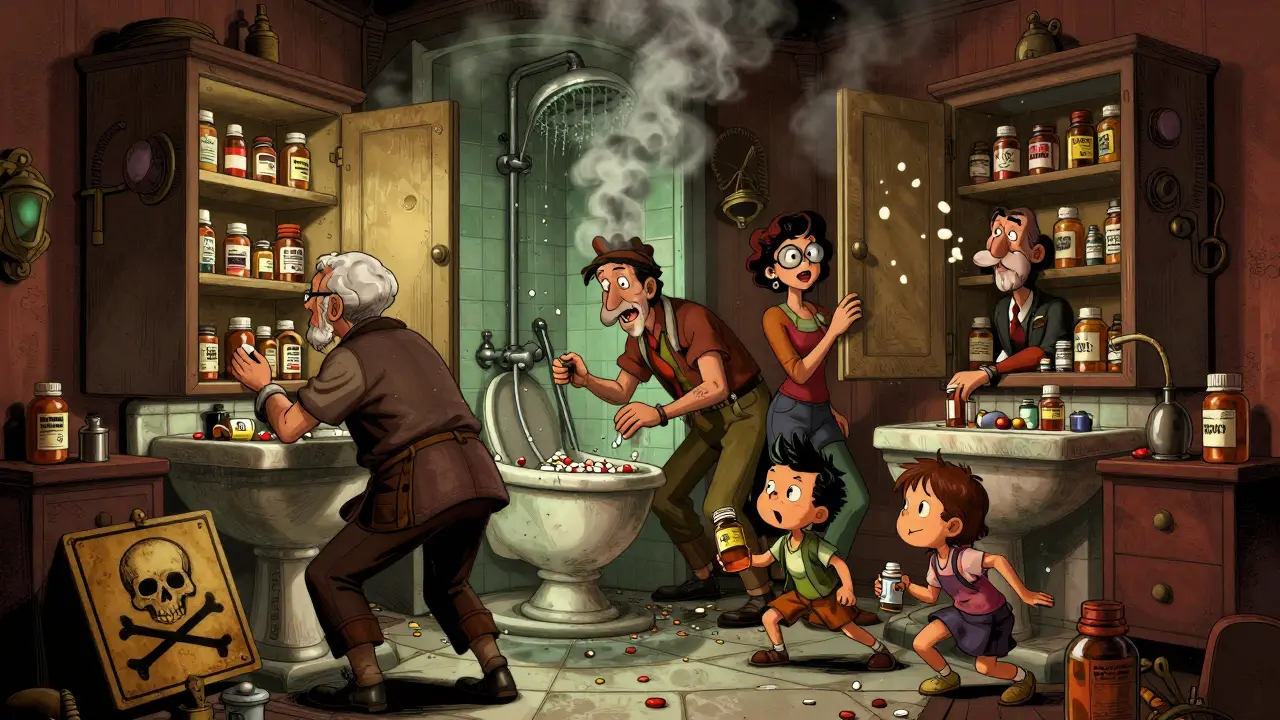
Medication errors in shared homes are not just a statistic; they are a daily risk for millions of families. Whether you live with aging parents, roommates, or young children, the way you store pills and liquids can mean the difference between effective treatment and a hospital visit. The problem isn't usually malice-it's convenience. We toss bottles in bathroom cabinets, leave insulin on the counter, or forget that a 'locked' drawer is only locked if someone remembers to lock it.
The stakes are high. According to data from SeniorHelpers, nearly two-thirds of families in multi-generational households reported at least one medication-related incident in a single year. In professional settings like assisted living facilities, the Joint Commission has cited 13% of hospitals for failing basic storage standards. This guide cuts through the noise to give you a practical, safe system for managing meds in any shared space.
Why Standard Storage Fails in Shared Homes
We often treat medication storage like laundry-something we do when we have time. But unlike socks, medications degrade, expire, and can be lethal if accessed by the wrong person. The biggest failure point is the bathroom. It seems logical because it’s where you take your morning pill, but bathrooms are humid, hot, and poorly secured. Heat and moisture destroy drug efficacy faster than you think. Dr. Jane Smith from Johns Hopkins Hospital notes that temperature excursions can cause up to 30% degradation in certain antibiotics within just 24 hours.
In shared spaces, the risks multiply. You aren’t just protecting yourself; you’re protecting housemates who may have different cognitive abilities, children who are curious, or even well-meaning family members who might accidentally double-dose someone. The gap between policy and practice is wide. One study found that even in regulated facilities, some staff stored meds on open dining room shelves despite having locked closets available. If professionals struggle with this, how can we expect casual home users to get it right without a system?
The Golden Rules of Secure Storage
Security is non-negotiable. Regulations for assisted living require medications to be kept under lock and key 100% of the time. While your home isn’t subject to the same audits, the principle remains: unauthorized access must be physically prevented. Here is how to apply this rule effectively:
- Use Dedicated Lockboxes: Don’t rely on furniture locks that are easily picked or forgotten. Invest in a dedicated medication safe or a heavy-duty lockbox. These are designed to resist tampering and are small enough to fit in a bedroom closet.
- Separate Controlled Substances: If anyone in the household takes opioids, stimulants, or sedatives, these need a separate, higher-security layer. DosePacker guidelines specify that locked cabinets accessible only to authorized personnel are required for controlled substances.
- Avoid Bathroom Cabinets: Remove all meds from the bathroom immediately. The humidity fluctuates wildly with showers, and the lack of security makes it a prime target for accidental ingestion by children.
For multi-generational households, SeniorHelpers recommends bedroom-based storage with locked drawers. This keeps meds out of sight and away from common areas like kitchens or living rooms where confusion is more likely to happen.

Temperature Control: More Than Just "Cool"
Most people think "room temperature" means anywhere in the house. It doesn’t. Room temperature for medication stability is typically defined as 68°F to 77°F (20°C to 25°C). Anything hotter, especially near windows, ovens, or radiators, breaks down active ingredients.
Refrigeration is trickier. Liquid medications, insulins, and certain biologics require cold storage, but not just anywhere in the fridge. Eper.com guidelines state that liquid meds should be stored at 36-46°F (2-8°C) in the center of the refrigerator. Why the center? Because door shelves fluctuate significantly every time someone opens the fridge. A user on CareGiverForum shared a harrowing story: after storing insulin in the door shelf for three weeks, their father’s blood sugar became uncontrolled because the temperature fluctuated 10°F more than the center compartment.
If you share a fridge with others, consider these steps:
- Buy a Small Dedicated Fridge: For expensive or critical meds like insulin, a small, dedicated mini-fridge eliminates the risk of food contamination and temperature swings.
- Use Insulated Containers: If you must use a main fridge, keep meds in an insulated container placed in the middle shelf, away from the door.
- Monitor Temperature: Use a simple digital thermometer inside the fridge. Check it weekly. If it goes above 46°F, check the manufacturer’s instructions to see if the med is still viable.
Organizing for Clarity and Safety
Chaos leads to errors. When five people share a medicine cabinet, finding the right pill becomes a scavenger hunt. Professional facilities use "medication on time" systems with pre-packaged bubble packs. While you can’t always replicate this at home, you can adopt similar organizational principles.
Start by categorizing. Group meds by person, then by frequency (daily, weekly, as-needed). Clear labeling is essential. The Joint Commission found that 12% of hospitals received citations specifically for poor medication labeling. In a home setting, this means:
- Keep Original Bottles: Never transfer pills to generic containers unless directed by a pharmacist. The original label has critical info like expiration dates and lot numbers.
- Use Pill Organizers Cautiously: Weekly pill boxes are great for routine maintenance but risky if not checked daily. Always cross-reference with the original bottle before refilling.
- Label Clearly: Use a permanent marker to write the name and dosage on each bottle if the print is faded. Add color-coded stickers for different family members to prevent mix-ups.

Documentation and Disposal: Closing the Loop
You might think documentation is only for nurses, but in a shared home, a simple log saves lives. Who took what? Was there a missed dose? Did someone report a side effect? For professional care, Individualized Medication Administration Records (MARs) are standard. At home, a shared whiteboard or a simple notebook works wonders. Spend 15 minutes a day updating it. It creates accountability and helps catch patterns early.
Disposal is equally important. Expired meds lose potency and can become toxic. The Joint Commission cites 10% of hospitals for expired medications. In your home, conduct a "med audit" every three months. Throw out anything past its expiry date. Do not flush them unless instructed (this harms water supplies). Instead, use local pharmacy take-back programs or mix them with unpalatable substances like coffee grounds before trashing them to prevent accidental ingestion by pets or kids.
| Feature | Assisted Living Facility | Multi-Generational Household |
|---|---|---|
| Security Level | High (100% locked storage required) | Variable (Only 28% use locked storage) |
| Temperature Monitoring | Dedicated fridges, documented logs | Shared fridges, often unmonitored |
| Documentation | Formal MARs for each resident | Rarely maintained formally |
| Error Rate | Lower due to protocols | Higher (67% report incidents yearly) |
Overcoming Common Challenges
Space is a major issue. Seventy-eight percent of small assisted living homes report space limitations. In apartments, this is even worse. The solution is verticality and consolidation. Use over-the-door organizers for non-critical items and keep high-risk meds in a single, secure location rather than scattered around the house.
Resistance is another hurdle. Sixty-three percent of multi-generational households face pushback against locked storage. Family members feel it’s impersonal or restrictive. Address this by framing security as safety, not suspicion. Show them the stats: 42% of home incidents involve children accessing meds in bathroom cabinets. Education reduces resistance.
Technology is helping. Smart medication storage systems, like those introduced by DosePacker in 2024, monitor temperature and humidity automatically. While expensive for most homes, affordable Bluetooth thermometers can plug into your phone to alert you if the fridge gets too warm. As the market grows, these tools will become cheaper and more accessible.
Where is the safest place to store medication in a shared apartment?
The safest place is a locked box or cabinet in a bedroom, away from direct sunlight and heat sources. Avoid bathrooms due to humidity and kitchens due to accessibility. Ensure the location is consistent so everyone knows where to find it in an emergency.
Do I really need a separate fridge for my insulin?
While not strictly mandatory, it is highly recommended. Main refrigerators experience significant temperature fluctuations when doors are opened. A dedicated mini-fridge maintains a stable 36-46°F range, ensuring your insulin remains effective. If using a main fridge, store it in the center shelf, never in the door.
How often should I check for expired medications?
Conduct a full audit every three months. Check expiration dates on all bottles and blister packs. Dispose of expired items properly via pharmacy take-back programs. Regular checks prevent accidental use of degraded or ineffective drugs.
What should I do if a roommate accidentally takes the wrong medication?
Contact Poison Control immediately (1-800-222-1222 in the US) or seek emergency medical attention. Do not wait for symptoms to appear. Keep the medication bottle handy to provide details about the drug and dosage to medical professionals.
Are smart medication dispensers worth the cost for home use?
For households with multiple complex regimens or cognitively impaired residents, yes. They reduce errors and provide logs. For simpler needs, a traditional locked box and calendar reminder system is sufficient and more cost-effective. Consider the complexity of the regimen before investing.

Laura ciotoli
People really need to stop treating medication storage like a casual suggestion. It is not about convenience, it is about survival. If you are leaving insulin in the door of your fridge because it is 'easier' for you to grab, you are actively compromising the efficacy of that drug. The temperature fluctuations alone render it useless within weeks. Do not blame the manufacturer when your blood sugar spikes; blame your own negligence. Secure your meds in a dedicated lockbox and monitor your fridge temps. Stop being lazy with health protocols.

Nisha Koshti
omg this post is sooo boring!! :(( why do we have to follow all these rules?? i mean seriously who has time for locked boxes and thermometers?? :( my mom just puts her pills in the jar on the counter and nothing bad happens... probably because the government wants us to buy more expensive safes or something... conspiracy theories aside... i think people are just too stressed out by this stuff... lol

Jannet Suen
I get that some people might feel overwhelmed by the strictness of these guidelines, but honestly, safety isn't optional when lives are at stake. :) It’s easy to dismiss the risks until an accident happens. I used to be skeptical about the whole 'locked cabinet' thing too, thinking it was overly dramatic, but after seeing how humidity affects my own medications, I’ve become a believer. Let’s support each other in making small changes rather than judging those who haven’t caught up yet. We’re all learning! :)

Sarah O'Donnell
ugh. another day another article telling us how to live 🙄 i mean sure, maybe if everyone followed every single rule perfectly we wouldn't have issues but let's be real here... people are messy and chaotic and expecting them to act like robots is just naive 😒 also why does everyone assume we all have the space for mini-fridges?? rent is high enough without buying extra appliances just to store pills properly. it feels like the system is set up to fail us anyway 💔

Amelia Vaughan
This is basic common sense. Why do we even need a guide for this? People are just irresponsible. Keep your meds locked away. Don't let kids touch them. Simple. If you can't manage that, you don't deserve to have children or roommates. Just get it together.

andrew iregbayen
Hey guys, I found this part about the bathroom humidity really interesting! I never realized that heat could degrade antibiotics so quickly. I usually keep everything in the bathroom cabinet because it's where I brush my teeth. I'm definitely going to move my stuff to a bedroom closet tonight. Thanks for the tip!

Claire A
I love how practical this advice is! It’s so reassuring to know that there are simple steps we can take to make our homes safer. I started using a pill organizer last week and it has made such a difference in my morning routine. Plus, knowing exactly what I’m taking gives me peace of mind. You’ve got this, everyone! Small changes lead to big improvements. Keep going! ✨

Kevin S
Great tips here! 👍 I switched to a dedicated mini-fridge for my dad's insulin and it’s been a game changer. No more worrying about the door temp swings. Highly recommend it if you can afford one. Stay safe out there! 💪

Madison Jones
This is incredibly important information!!! I cannot stress enough how crucial it is to label your bottles clearly!!! So many accidents happen because someone grabbed the wrong bottle in a rush!!! Please, please, use permanent markers and color-coded stickers!!! It takes five minutes but it could save a life!!! Don't skip this step!!!

Brian Fibelkorn
The systemic failure of domestic pharmaceutical management protocols is indicative of broader societal neglect regarding patient autonomy and safety standards. The reliance on individual vigilance rather than structural safeguards creates an untenable risk matrix for vulnerable populations. We must advocate for mandatory smart-storage integration in all residential units to mitigate human error factors.

David Rangkhal
i think the key here is communication with housemates. instead of locking everything away immediately which might cause tension try having a family meeting first. explain why certain meds need secure storage. most people will understand once they see the facts. peace and safety for all 🙏

Chelsea Grdina
In my experience living in various shared spaces across different cultures, I've noticed that the approach to medication storage varies wildly depending on local norms and available resources. In some communities, communal trust replaces locks, while others prioritize privacy above all else. What I've learned is that adapting these guidelines to fit your specific household dynamic is crucial. For instance, in Canada, we often deal with extreme temperature variations, so ensuring that medications aren't exposed to freezing drafts near windows is just as important as keeping them away from summer heat. It’s a delicate balance between security and accessibility that requires ongoing dialogue among all residents to ensure everyone feels respected and safe.
Write a comment