Recent POST



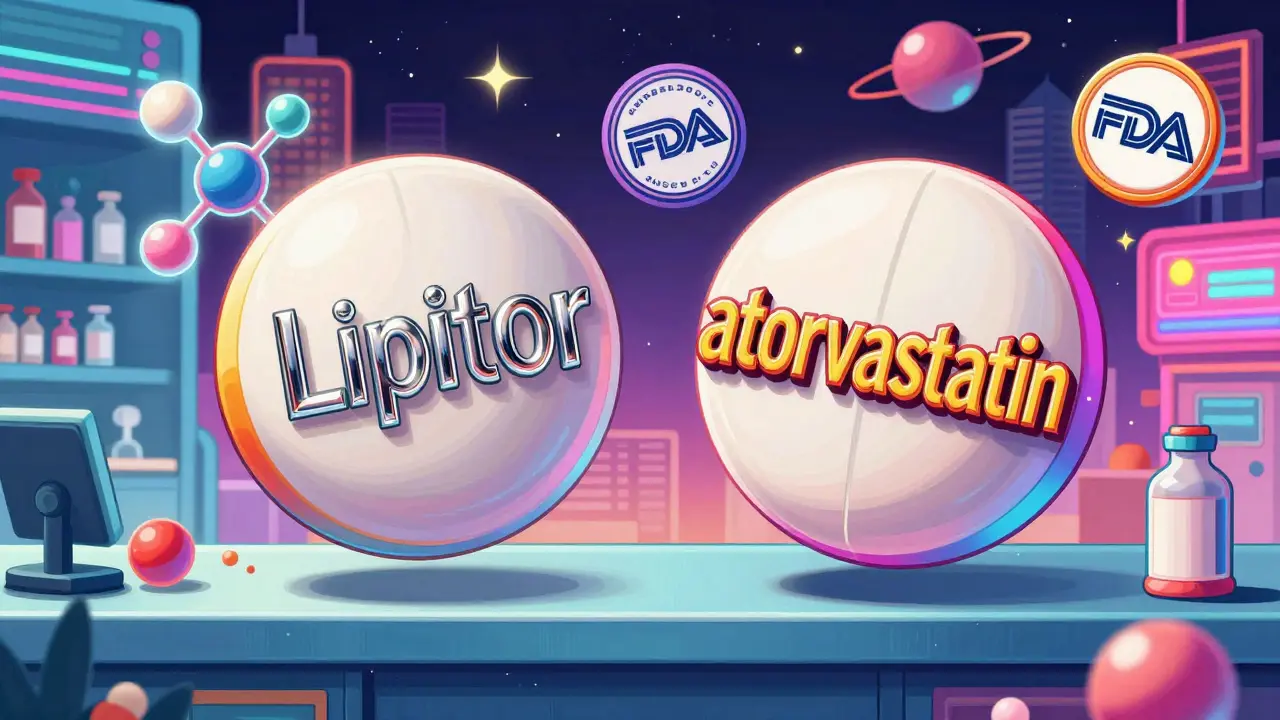
When you pick up a prescription, you might see two names on the label: one you recognize, like Lipitor or Advil, and another that looks unfamiliar, like atorvastatin or ibuprofen. The second one is a generic drug. It’s not a cheaper version of the original - it’s the same medicine, just without the brand name. And for most people, it works just as well.
What Exactly Is a Generic Drug?
A generic drug is a medicine that contains the exact same active ingredient as a brand-name drug. That means if you take a generic version of metformin for diabetes, you’re getting the same chemical compound as the brand-name version, Glucophage. The FDA requires that generic drugs match the brand-name drug in dosage, strength, route of administration, safety, and effectiveness. In plain terms: same drug, same result. The only differences are in the inactive ingredients - things like dyes, fillers, or flavorings. These don’t affect how the drug works in your body. They’re changed just so the pill looks different. That’s why a generic pill might be white and oval instead of blue and capsule-shaped. It’s not a different medicine. It’s the same thing, packaged differently.How Are Generic Drugs Approved?
Before a generic drug can be sold, it must pass a strict review by the U.S. Food and Drug Administration (FDA). The process is called the Abbreviated New Drug Application, or ANDA. Unlike brand-name drug makers, who spend years and billions of dollars testing their drugs in labs and clinical trials, generic manufacturers don’t need to repeat those studies. Instead, they prove something called bioequivalence. That means the generic drug releases the same amount of active ingredient into your bloodstream at the same speed as the brand-name version. The FDA requires that the rate and extent of absorption fall within 80% to 125% of the brand-name drug’s levels. That’s a tight range - and it’s not just a guess. It’s backed by data from real human studies, usually with 24 to 36 healthy volunteers. Manufacturing standards are just as strict. The FDA inspects over 3,500 generic drug facilities each year - in the U.S., India, China, and elsewhere. These inspections check for everything from how the ingredients are mixed to how the pills are packaged. The same rules that apply to Pfizer or Merck apply to the smallest generic manufacturer. If a facility fails, the FDA blocks its products from entering the market.Are Generic Drugs Really as Safe and Effective?
Yes. And the evidence is overwhelming. The Institute of Medicine reviewed 38 clinical studies on generic cardiovascular drugs and found no meaningful difference in outcomes compared to brand-name versions. The American College of Physicians, the American Medical Association, and the FDA all agree: generic drugs are therapeutically equivalent. Dr. Janet Woodcock, former head of the FDA’s drug review division, put it simply: “The FDA would not allow generics to be marketed unless they were therapeutically equivalent to the brand.” Even in cases where people worry about small variations - like with blood thinners such as warfarin or thyroid meds like levothyroxine - studies show that switching between brand and generic doesn’t cause harm for the vast majority of patients. That said, doctors may choose to monitor these patients more closely, especially when first switching. But that’s not because generics are less effective. It’s because these drugs have a narrow therapeutic window - meaning tiny changes in blood levels can matter. And that applies to both brand and generic versions.
Why Are Generic Drugs So Much Cheaper?
The price difference isn’t because generics are made with lower quality. It’s because they don’t carry the same costs. Developing a new brand-name drug can cost over $2.6 billion - that includes research, clinical trials, marketing, and patent protection. Once the patent expires, other companies can make the same drug without repeating those expenses. They don’t need to run expensive animal studies or multi-year clinical trials. They just need to prove bioequivalence. That cuts development time from 10-15 years down to 2-3. The result? Generics cost 80% to 85% less than their brand-name counterparts. In the U.S., generics make up 90% of all prescriptions filled - but only 13% of total drug spending. Over the last decade, they’ve saved the healthcare system more than $2 trillion. When more than five companies start making the same generic, prices can drop even further - sometimes to just 9% of the original brand price. That’s why competition matters. The more makers, the lower the cost.What About Biosimilars? Are They the Same?
Not exactly. Biosimilars are the generic version of biologic drugs - complex medicines made from living cells, like insulin, rheumatoid arthritis treatments, or cancer therapies. Unlike small-molecule drugs (like aspirin or metformin), biologics can’t be copied exactly. Their structure is too complex. So biosimilars are “highly similar” to the original, not identical. They still need to prove safety and effectiveness, but the testing is more involved. That’s why they’re usually only 20% to 30% cheaper than the brand-name biologic - not 80% like traditional generics. The FDA approved the first biosimilar in 2015, and adoption has been slow. But as more biologics lose patent protection, biosimilars are expected to play a bigger role in lowering costs - especially for expensive chronic conditions.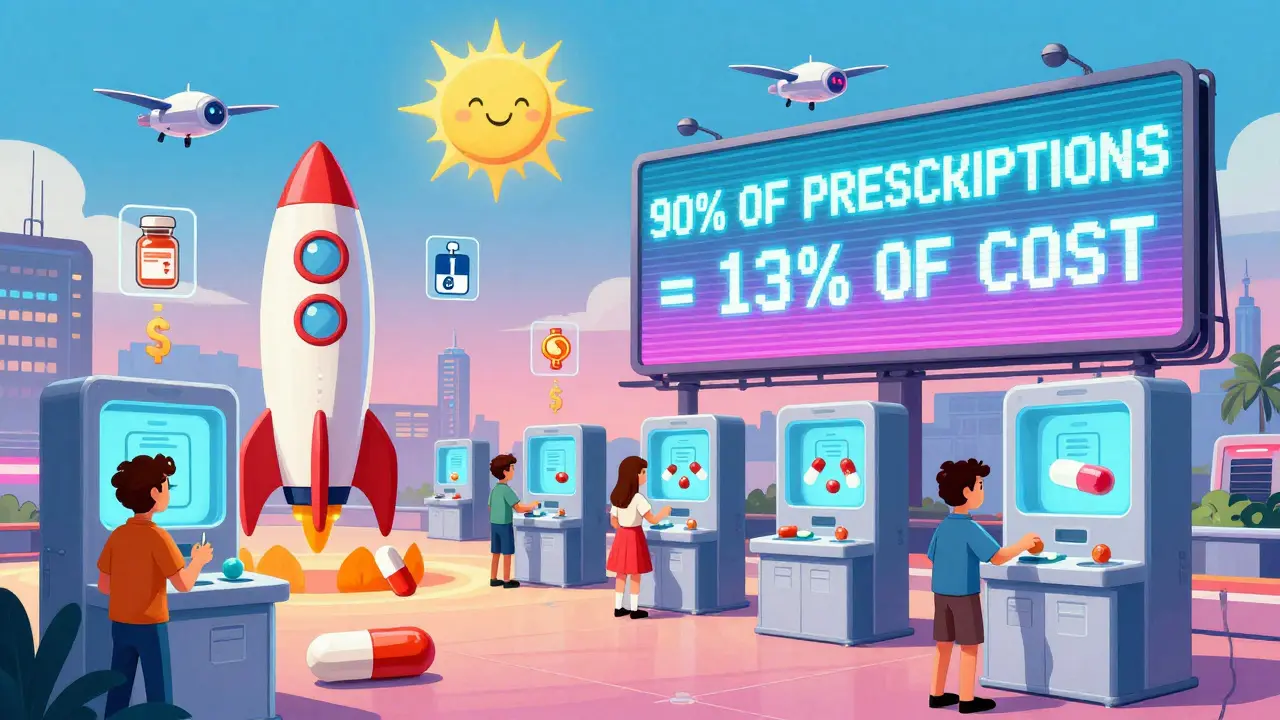
Can Pharmacists Substitute Generics Automatically?
In 49 U.S. states, yes. Pharmacists can swap a brand-name drug for a generic unless the doctor specifically writes “dispense as written” or “no substitution.” This is called therapeutic substitution. It’s legal, safe, and encouraged by most health systems. The only exceptions are for drugs with a narrow therapeutic index - where even tiny differences in blood levels could cause problems. Even then, the FDA and most medical groups say substitution is still safe if done properly. The key is communication. If you switch from one brand to another - even if both are generic - your pharmacist should let you know. And if you notice any changes in how you feel, tell your doctor.What’s Next for Generic Drugs?
Between 2023 and 2027, over 350 brand-name drugs - worth $138 billion in annual sales - will lose patent protection. That means a wave of new generics will hit the market. Drugs for high cholesterol, asthma, depression, and even some cancer treatments will become much cheaper. The FDA is also updating its rules to speed up approvals. Under the Generic Drug User Fee Amendments (GDUFA) III, the goal is to review 90% of applications within 10 months. They’re also paying more attention to complex generics - like inhalers, eye drops, and topical creams - which have been harder to copy accurately. But there are risks. Over 80% of the active ingredients in generic drugs come from just two countries: India and China. Supply chain disruptions - like those seen during the pandemic - can lead to shortages. The FDA reported a 22% jump in drug shortages in 2022, partly because of manufacturing issues. Still, the trend is clear: generics are the backbone of affordable healthcare. They’re not a compromise. They’re the standard.What Should You Do?
If your doctor prescribes a brand-name drug, ask: “Is there a generic version?” Most of the time, there is. And if your pharmacy offers a generic, take it - unless your doctor says otherwise. Don’t assume a higher price means better quality. A $10 generic pill isn’t weaker than a $100 brand-name one. It’s the same medicine, just without the advertising budget. If you’re worried about switching - maybe you’ve heard stories about side effects or changes in how you feel - talk to your pharmacist. They can explain the differences in shape, color, or filler. They can also check if your medication is one of the rare cases where extra monitoring is needed. Generic drugs aren’t just a cost-saving trick. They’re a proven, science-backed way to make essential medicines accessible to everyone. And for most people, they’re the smartest choice you can make.Are generic drugs as safe as brand-name drugs?
Yes. The FDA requires generic drugs to meet the same strict standards as brand-name drugs for safety, strength, quality, and performance. They must prove bioequivalence - meaning they deliver the same amount of active ingredient into your bloodstream at the same rate. Thousands of inspections and clinical studies confirm they work just as well.
Why do generic pills look different from brand-name pills?
The active ingredient is the same, but the inactive ingredients - like color, shape, flavor, or filler - are changed to avoid trademark infringement. These don’t affect how the drug works. A white oval pill and a blue capsule with the same active ingredient are medically identical.
Can I switch from a brand-name drug to a generic without problems?
For most people, yes. Over 90% of prescriptions in the U.S. are filled with generics, and studies show no meaningful difference in effectiveness. For drugs with a narrow therapeutic index - like warfarin or levothyroxine - your doctor may monitor you more closely at first, but switching is still safe and common.
Why are generic drugs so much cheaper?
Generic manufacturers don’t have to repeat expensive clinical trials or pay for brand marketing. They only need to prove bioequivalence, which costs far less. That saves consumers 80-85% compared to the brand-name version. Competition among multiple generic makers drives prices even lower.
Are all generic drugs made in the U.S.?
No. About 80% of the active ingredients in generic drugs come from facilities in India and China. But the FDA inspects all manufacturing sites - no matter where they’re located - to ensure they meet the same U.S. quality standards. Every batch of generic drug sold in the U.S. must pass FDA inspection.
Do generic drugs expire faster than brand-name drugs?
No. Generic drugs must pass the same stability testing as brand-name drugs to prove they remain effective and safe until their expiration date. The FDA requires that both types have identical shelf life under proper storage conditions.

Oluwapelumi Yakubu
Man, I used to think generics were just knockoffs-like fake designer jeans you buy off a street vendor. But after my cousin got switched from brand-name insulin to generic and didn’t drop dead? I did some digging. Turns out, the FDA’s got more muscle than your local DMV. Same active ingredient, same bioavailability, same damn results. It’s not magic-it’s chemistry. And the fact that we’re still paying $100 for a pill when a $5 version does the same job? That’s not science. That’s capitalism with a side of brand worship.

en Max
It is imperative to underscore, with unequivocal clarity, that the regulatory framework governing the approval of generic pharmaceuticals-specifically, the Abbreviated New Drug Application (ANDA) pathway-is predicated upon rigorous, statistically validated bioequivalence criteria, wherein the 90% confidence interval for the ratio of AUC and Cmax must fall within the predefined 80–125% acceptance range, as stipulated by the FDA’s Guidance for Industry (2021). This is not anecdotal; it is evidence-based pharmacokinetic science.

Angie Rehe
Wait-you’re telling me I’ve been wasting money for years? My doctor never even mentioned generics. And now you’re saying my $120 brand-name antidepressant is literally the same chemical as the $8 version? That’s unethical. Why didn’t anyone tell me? I’ve been paying for marketing, not medicine. Someone needs to sue these pharma giants. Like, NOW.

Jacob Milano
EVERYONE needs to stop being sheep! You think the FDA cares about you? They’re just rubber-stamping pills made in some factory in Mumbai that’s got more rats than workers. I read a Reddit thread where someone switched to generic levothyroxine and started having panic attacks-then the doctor said it was ‘just the fillers.’ Fillers?! My thyroid is not a science fair project! I’m done trusting this system.

Enrique González
Just took my generic metformin this morning. Felt the same. No weird side effects. No magic. No drama. Just got the job done. Sometimes the simplest solution is the best one.

John Wilmerding
While the FDA’s bioequivalence standards are robust, it is worth noting that certain high-risk medications-such as narrow therapeutic index drugs like warfarin, phenytoin, and levothyroxine-warrant heightened clinical vigilance during transitions, even when switching between generic manufacturers. The variability in excipients, while pharmacologically inert in most cases, may induce subtle differences in dissolution kinetics among patients with altered gastrointestinal motility or absorption profiles. Therefore, while generics are overwhelmingly safe and effective, individualized monitoring remains prudent in select populations.

Peyton Feuer
my pharmacist just switched me to generic and i was freaked out but then she gave me a pamphlet and showed me the FDA page. now i feel way better. also, my pill is white now and i kinda miss the blue one… but hey, saved $90. worth it.

Vikram Sujay
Let us reflect upon the deeper implications: the commodification of health has led us to equate cost with value, and branding with efficacy. Yet, the molecular structure of atorvastatin does not care whether it is encased in a blue capsule bearing the name ‘Lipitor’ or a white tablet labeled ‘Atorvastatin’. The body responds to chemistry, not logos. The true innovation lies not in creating new drugs, but in ensuring equitable access to those already proven. Generics are not a compromise-they are the realization of medicine’s original purpose: healing, not profit.

Aaron Mercado
Ugh. I knew it. The FDA is just letting these Chinese and Indian factories dump crap on us. I bet they use talcum powder as filler. And don’t even get me started on the fact that they don’t even test on animals anymore?! That’s not science-that’s negligence. I’m switching back to brand name, even if I have to sell my car.
Write a comment