Recent POST






Every year, preventable medication errors cause significant harm. According to the Institute of Medicine, these mistakes lead to at least 1.5 million adverse drug events annually in the United States alone. The financial toll is staggering-approximately $3.5 billion in excess medical costs-and the human cost is even higher, with an estimated 7,000 deaths attributed to these errors in U.S. hospitals each year. Most of these incidents stem from a simple failure: not verifying the medication name, strength, or dosage form correctly before administration.
You might think that checking a pill bottle is straightforward. It isn’t. A missing space between a number and a unit, a confusing abbreviation, or a look-alike drug name can turn a routine prescription into a life-threatening situation. Whether you are a healthcare professional, a pharmacy technician, or a patient managing your own health, understanding how to verify these three critical components is essential. This guide breaks down exactly how to check medications safely, using current standards from organizations like the Institute for Safe Medication Practices (ISMP) and the U.S. Food and Drug Administration (FDA).
The Three Pillars of Medication Verification
To ensure safety, you must verify three specific elements every time you handle a medication: the name, the strength, and the dosage form. Skipping any one of these steps creates a gap where errors can slip through. Let’s look at why each matters and what to watch for.
1. Verifying the Medication Name
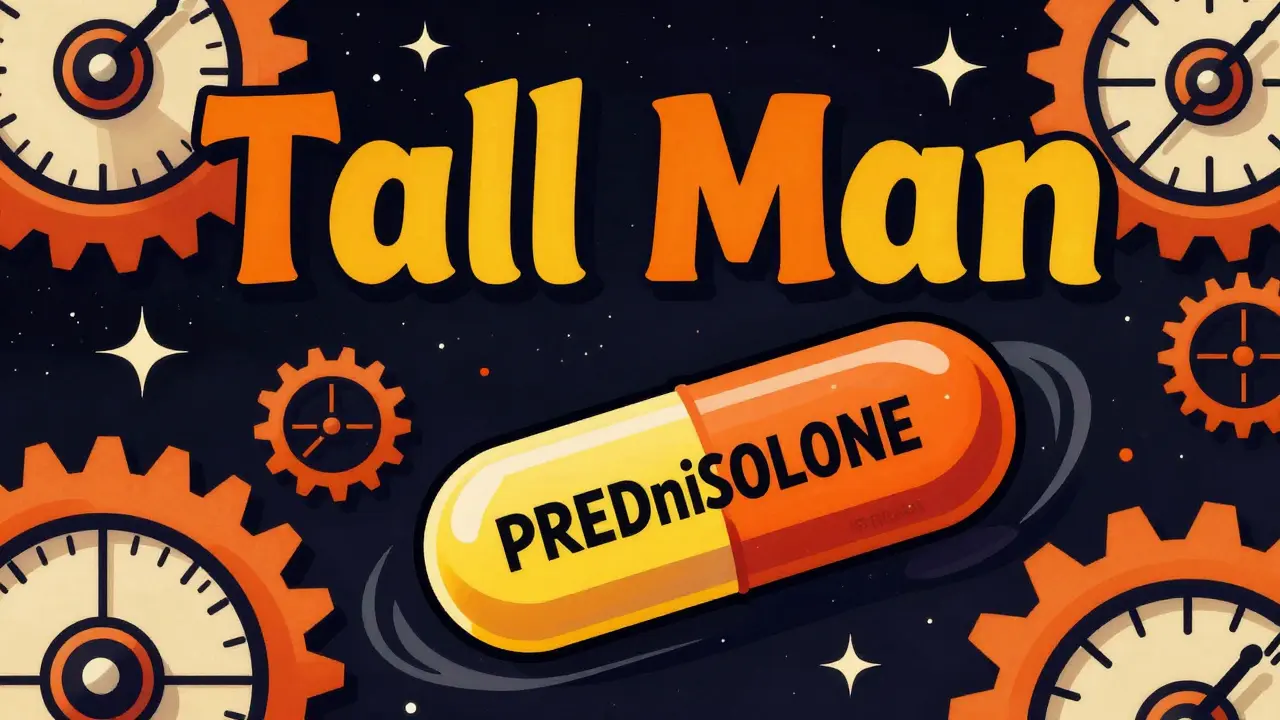
Drug names are often deceptively similar. Look-alike/sound-alike (LASA) drugs are a major source of confusion. For example, predniSONE and predniSOLONE sound nearly identical but have different potencies and uses. The ISMP recommends using "Tall Man" lettering to highlight differences in these names. When reading a label or an electronic order, slow down. Do not rely on memory. Compare the written name character by character against the original prescription.
Absent information is also dangerous. Research by First DataBank found that 87% of medication errors involving drug name confusion occurred when the strength or dosage form was omitted. If a prescription says only "take Amoxicillin" without specifying the type or amount, it is incomplete. Always request clarification if the name seems ambiguous or if generic and brand names are mixed without clear distinction.
2. Checking the Strength and Units
Strength verification is where many catastrophic errors happen. Dr. Jerry Phillips, former Associate Director of the FDA's Office of Medication Errors, noted that 34% of reported errors involved strength miscalculations. The key here is precision in formatting.
- Use spaces: Never write "10mg." Always write "10 mg." The ISMP reports that this simple spacing prevents about 12% of unit misinterpretation errors.
- Avoid ratios for injectables: Instead of writing epinephrine as 1:10,000, use the explicit concentration: 0.1 mg/mL. Between 2010 and 2015, there were 236 documented errors just from misinterpreting epinephrine ratios.
- Standardize units: Use "mcg" for micrograms instead of the Greek symbol μg, which can be mistaken for "mg." Use "unit" instead of "U," which can look like a zero, leading to tenfold dosing errors.
- Leading zeros: Always write "0.5 mg," never ".5 mg." The decimal point can be missed easily.
For oral solids like tablets, the strength should be expressed as weight per unit (e.g., 500 mg Each). For liquids, it is weight per volume (e.g., 5 mg/mL). Double-check that the denominator matches the form of the medication.
3. Confirming the Dosage Form
The dosage form dictates how the drug enters your body. Administering an oral tablet rectally, or a topical cream orally, can be fatal or ineffective. Common dosage forms include tablets, capsules, injections, inhalers, and patches.
In community pharmacies, barcode scanning has reduced dispensing errors by 83%, largely because it forces a match between the digital record and the physical package. However, technology fails sometimes. Always visually inspect the medication. Does the pill match the description? Is the liquid clear or cloudy as expected? If the prescription says "tablet" but you hold a capsule, stop. Verify immediately.
Where and When to Verify
Verification is not a one-time event. The American Society of Health-System Pharmacists (ASHP) mandates checks at three critical points. Missing any step increases risk.
- When Receiving the Order: Check for completeness. Does the order have the drug name, strength, unit, dosage form, route, and frequency? If anything is missing, do not proceed. Contact the prescriber.
- When Preparing the Medication: Compare the physical product against the original order. Scan barcodes if available. Ensure the expiration date is valid and the packaging is intact.
- Before Administration: This is the final safety net. Confirm the patient’s identity using two identifiers (like name and date of birth). Perform a "read-back": verbally repeat the medication name, strength, and dosage form to yourself or a colleague before giving it to the patient.
Studies show that implementing a "four-eyes" protocol-where two professionals verify high-alert medications together-reduced errors by 94% in a Mayo Clinic case study. While not always possible in every setting, verbal read-backs are a powerful, free tool you can use right now.
Technology vs. Human Judgment
Electronic Health Records (EHRs) and clinical decision support systems are vital tools. Systems like Epic and Cerner flag potential LASA errors and calculate doses automatically. A 2022 JAMA Internal Medicine study found that EHRs with integrated decision support reduce medication errors by 55%. However, they are not foolproof.
Dr. Robert Wachter warns of "automation bias," where clinicians trust the computer too much and ignore visible discrepancies. In 2020, The Joint Commission documented that 18% of alert fatigue-related errors came from staff ignoring warnings because they assumed the system had already checked everything. You must remain the active verifier. Technology assists; it does not replace your eyes and brain.
| Method | Error Reduction | Key Limitation |
|---|---|---|
| Barcode Scanning | 83% reduction in dispensing errors | Requires scannable labels; fails if wrong label is printed |
| EHR Clinical Decision Support | 55% reduction in overall errors | Alert fatigue; automation bias |
| Manual Visual Verification | Baseline standard | Error rates 3.7x higher than tech-assisted methods |
| Four-Eyes Protocol | 94% reduction for high-alert meds | Time-intensive; requires staffing availability |

Common Pitfalls to Avoid
Even experienced professionals make mistakes. Here are the most common traps based on real-world data from forums like Reddit’s r/Pharmacy and surveys by the Pharmacy Technician Certification Board.
- Insulin Confusion: Insulin comes in various strengths (e.g., U-100 vs. U-500). In user reports, insulin strength confusion accounted for 37% of horror stories. Always double-check the concentration on the vial box, not just the pen label.
- Abbreviation Misinterpretation: "MS" can mean morphine sulfate or magnesium sulfate. In emergency departments, 12% of orders were misinterpreted due to this ambiguity. Write out full names.
- Decimal Slippage: Heparin comes in 5,000 units/mL and 50 units/mL. A nurse once prevented a 100-fold overdose by cross-referencing the vial label with the electronic order. Always expect the dose to be within a reasonable range for the condition.
- Label Design Issues: Poor contrast or small font contributes to 23% of errors. If you cannot read the label clearly, do not guess. Ask for a replacement or use a magnifier.
Training and Best Practices
Safety is a habit, not an accident. The ISMP recommends a minimum of 4 hours of initial training on medication verification, followed by quarterly 30-minute refreshers. Hospitals that implemented this saw a 63% drop in error rates.
If you are a patient, take charge of your own safety. Ask your pharmacist: "What is this medication for? What is the strength? How should I take it?" Read the discharge instructions carefully. If something looks different from what you remember, ask questions. Healthcare providers welcome these checks-they are your allies in preventing errors.
Remember, the goal is not just to follow rules, but to protect lives. Every time you pause to verify the name, strength, and dosage form, you are closing the loop on safety. Stay vigilant, stay precise, and never rush the process.
Why is spacing important in medication strength?
Spacing prevents visual misinterpretation. Writing "10mg" can look like "10mg" or even "10mg" depending on font, but "10 mg" clearly separates the number from the unit. The ISMP notes that proper spacing prevents approximately 12% of medication errors related to unit confusion.
What are look-alike/sound-alike (LASA) drugs?
LASA drugs are medications with names that are very similar in spelling or pronunciation, such as Celexa and Zyprexa. These similarities increase the risk of dispensing or administering the wrong drug. Using Tall Man lettering (e.g., predniSONE vs. predniSOLONE) helps distinguish them.
How can patients help verify their own medications?
Patients should always ask pharmacists to explain the medication name, strength, and purpose. They should compare the new prescription bottle with old ones if refilling. Reading the label aloud and confirming it matches the doctor’s instructions is a simple but effective safety step.
What is the "read-back" method?
The read-back method involves verbally repeating the medication name, strength, and dosage form before administration. This cognitive pause ensures the provider is actively processing the information rather than relying on autopilot. It is cited as effective in 89% of positive user experiences among nurses.
Are electronic systems enough to prevent errors?
No. While EHRs and barcode scanners significantly reduce errors, they can suffer from alert fatigue and automation bias. Human verification remains critical. Technology should support, not replace, careful visual and cognitive checks by healthcare professionals.