Recent POST






Danshen Interaction Risk Checker
Select your current medication to see if adding Danshen poses a bleeding or safety risk.
You might think that because Danshen is a natural herb used for centuries in Traditional Chinese Medicine, it’s safe to mix with your prescription heart meds. Think again. For people taking blood thinners like warfarin or newer anticoagulants, adding Danshen can turn a routine dose into a dangerous bleeding event. It’s not just a mild tweak; we’re talking about INR levels skyrocketing from a safe 2.5 to a risky 8.4 in some documented cases. If you’re managing heart health, understanding this specific interaction isn’t optional-it’s critical.
What Is Danshen and Why Do People Take It?
Danshen, also known as Salvia miltiorrhiza or red sage, is a root-based herb with a history stretching back to the Han Dynasty. In modern contexts, it’s marketed as a cardiovascular aid. Proponents claim it helps with angina, stroke prevention, and general heart health. The global market for Danshen hit $1.23 billion in 2022, showing just how popular it has become outside of Asia. But popularity doesn’t equal safety when you’re already on medication.
The herb works through active compounds called tanshinones and salvianolic acids. These chemicals don’t just sit quietly in your system. They actively inhibit platelet aggregation-meaning they stop your blood from clotting easily-and they dilate coronary arteries. While that sounds beneficial for someone with blocked arteries, it’s a double-edged sword if you’re already taking drugs designed to do the exact same thing.
The Warfarin Warning: A Major Red Flag
If you take warfarin, the combination with Danshen is classified as "Major" by WebMD and the Natural Medicines Comprehensive Database. The recommendation is blunt: do not take them together. Why? Because both substances thin your blood. When combined, their effects aren’t just additive; they multiply unpredictably.
Clinical evidence backs this up. A study published in the Journal of Internal Medicine documented a case where a patient stabilized on warfarin saw their INR (International Normalized Ratio) jump from a therapeutic range to 5.6 after taking Danshen every other day for four weeks. Another case in the Australian and New Zealand Journal of Medicine showed a patient’s INR spiking to 5.5 shortly after starting Danshen. These aren’t hypothetical scenarios; these are real patients who ended up in emergency rooms with significant bleeding risks.
The mechanism is clear. Danshen inhibits CYP2C9, a liver enzyme responsible for breaking down warfarin. When this enzyme is blocked, warfarin stays in your body longer and at higher concentrations than intended. Dr. I-Ming Liu from Kaohsiung Medical University found that Danshen could inhibit this enzyme by over 73% at clinically relevant doses. That means your usual dose effectively becomes a much larger dose.
Newer Anticoagulants Aren’t Safe Either
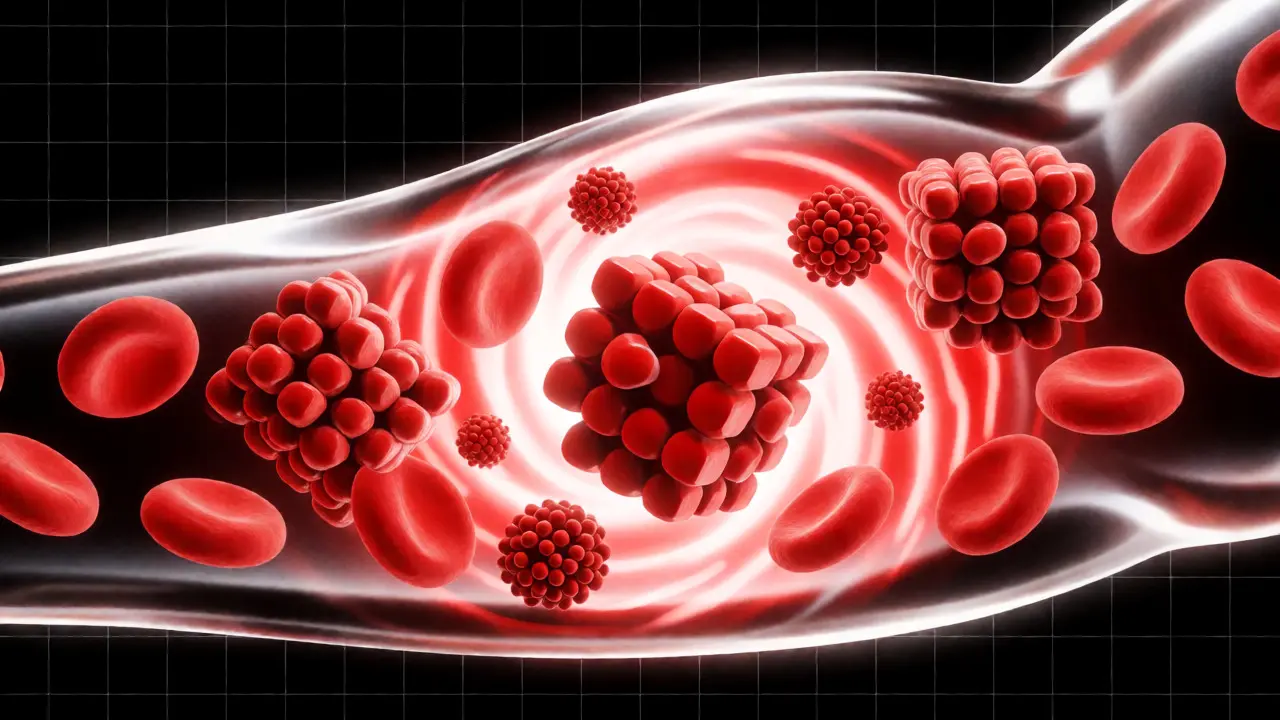
You might assume that because you’re on a newer drug like rivaroxaban (Xarelto) or apixaban (Eliquis), you’re safer. Recent research suggests otherwise. A 2022 NIH study demonstrated that Danshen tablets act as a mixed inhibitor of enzymes that metabolize rivaroxaban. This means Danshen can increase the concentration of rivaroxaban in your blood, raising the risk of clinically relevant non-major bleeding.
Unlike warfarin, which requires regular INR monitoring, newer anticoagulants have predictable pharmacokinetics-until you add an interacting herb. There is no standard monitoring test for rivaroxaban levels in daily practice, so you won’t know your blood is too thin until you start bleeding. And unlike pharmaceutical anticoagulants, there is no specific reversal agent for Danshen’s effects. If you bleed, doctors have fewer tools to immediately reverse the herb’s impact compared to reversing warfarin with vitamin K.

Real-World Risks and Hidden Dangers
The biggest danger with supplements like Danshen is inconsistency. Unlike a pill from Pfizer or Bayer, herbal products vary wildly in potency. One bottle might contain 0.05% tanshinone content, while another contains 5.2%. You cannot predict exactly how strong a single dose will be. This variability makes dosing interactions extremely difficult to manage.
Patient disclosure is another major hurdle. A 2019 survey in JAMA Internal Medicine found that only 28% of patients taking herbal supplements told their physicians. Many people view herbs as "natural" and therefore harmless, or they simply forget to mention them during a quick check-up. If your cardiologist doesn’t know you’re taking Danshen, they can’t adjust your medication accordingly.
Adverse events are well-documented. Beyond internal bleeding, users report bruising, nosebleeds, and gastrointestinal issues. For those with existing conditions like gastric ulcers, the added anti-clotting effect of Danshen can trigger severe hemorrhages. The complexity of Danshen’s multi-component system creates unpredictable pharmacokinetic interactions that even experienced clinicians struggle to anticipate reliably.
| Medication Type | Interaction Risk Level | Primary Mechanism | Monitoring Requirement |
|---|---|---|---|
| Warfarin | Major / Contraindicated | Inhibits CYP2C9 metabolism, increasing warfarin levels | Frequent INR checks required; often leads to ER visits |
| Rivaroxaban (Xarelto) | Moderate to Major | Inhibits metabolic pathways, increasing drug concentration | No routine monitoring; high risk of unmonitored bleeding |
| Aspirin | Moderate | Additive anti-platelet effects | Increased bruising and minor bleeding risk |
| Anti-hypertensives | Moderate | Vasodilation and blood pressure lowering effects | Risk of hypotension (low blood pressure) and dizziness |
How to Manage Your Heart Health Safely
If you are considering Danshen, transparency is key. Tell your doctor everything you take, including teas, powders, and capsules. If you are already on anticoagulants, ask specifically about Danshen. Don’t rely on internet forums alone; consult your pharmacist or cardiologist.
For those who insist on using Danshen despite the risks, close monitoring is non-negotiable. Some clinical reports suggest reducing warfarin doses by 20-50% when starting Danshen, but this must be done under strict medical supervision with twice-weekly INR checks until stability is confirmed. Never self-adjust your dosage based on guesswork.
Remember, "natural" does not mean "safe." The American Heart Association explicitly warns that Danshen can dangerously increase bleeding risk when combined with blood thinners. Your heart medication is carefully calibrated to keep you alive; introducing an unstandardized herb can throw that balance off in days, not months.
Can I take Danshen if I am on Eliquis?
It is generally not recommended without strict medical supervision. Research indicates that Danshen can inhibit the metabolism of rivaroxaban and potentially affect other factor Xa inhibitors like apixaban (Eliquis). This can lead to increased drug levels in the blood and a higher risk of bleeding. Since there is no routine blood test to monitor Eliquis levels, this interaction can go undetected until bleeding occurs.
Why is Danshen considered more dangerous than other herbs for heart patients?
Danshen has potent anticoagulant and vasodilatory properties that directly overlap with the mechanisms of many heart medications. Unlike milder herbs, it significantly inhibits liver enzymes (like CYP2C9) responsible for clearing drugs from the body. This leads to unpredictable spikes in medication effectiveness, causing INR levels to rise sharply and increasing the risk of serious internal bleeding.
Is there a reversal agent for Danshen-induced bleeding?
No, there is no specific antidote or reversal agent for the anticoagulant effects of Danshen itself. While doctors can treat the symptoms of bleeding (such as transfusions or administering fresh frozen plasma), they cannot instantly neutralize the herb's effect on the blood clotting cascade. This makes prevention and careful monitoring far more important than treatment.
How long should I wait before stopping Danshen before surgery?
Most surgeons recommend stopping herbal supplements, including Danshen, at least two weeks before any scheduled surgery. This allows enough time for the herb’s active compounds to clear from your system and for your blood clotting ability to return to baseline. Always confirm this timeline with your surgical team, as individual metabolism rates vary.
Does all Danshen cause the same interaction risks?
Not necessarily, but the risk remains high across most forms. Commercial preparations vary widely in the concentration of active ingredients like tanshinones and salvianolic acids. Some extracts may be weaker, but others can be highly potent. Because standardization is poor in the supplement industry, you cannot guarantee that one brand is safer than another regarding drug interactions.