Recent POST



Imagine being prescribed a life-saving medication, only to forget it half the time because you’re overwhelmed by side effects or simply don’t understand why it matters. You aren’t alone. According to the World Health Organization, about 50% of patients with chronic conditions fail to take their medicine as directed. This isn't just a personal struggle; it’s a massive healthcare crisis costing the U.S. system between $100 billion and $300 billion annually in preventable complications and hospital visits.
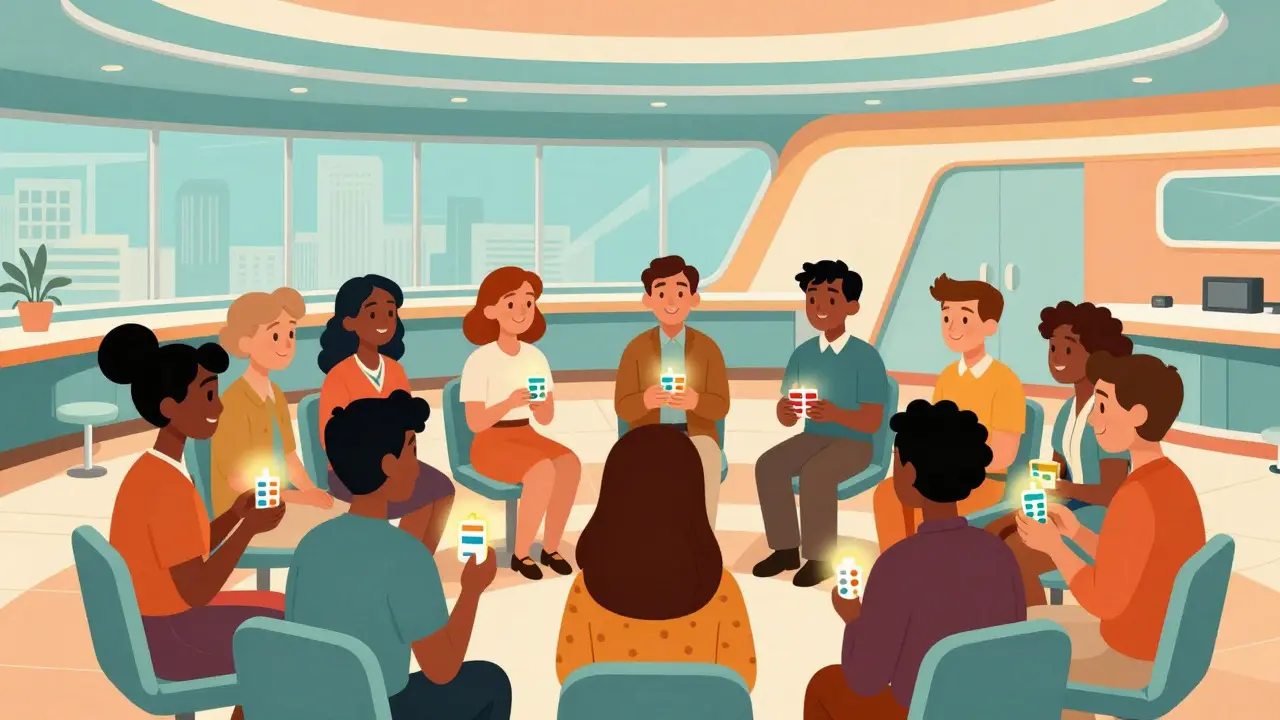
The solution isn't always another pill or a stern lecture from a doctor. Increasingly, healthcare providers are turning to support groups and community programs designed to help people stick to their treatment plans through shared experience and social connection. These programs leverage the power of peer support to turn isolation into empowerment, addressing the root causes of non-adherence like fear, confusion, and lack of motivation.
Why Peer Support Works Better Than Brochures
We’ve all received those colorful pamphlets at the pharmacy counter. They look nice, but do they change behavior? Research suggests not very much. A systematic review published in the Journal of Medical Care found that traditional educational brochures had a negligible effect on medication adherence (Cohen's d=0.15). In contrast, peer-facilitated interventions produced a significantly stronger impact (Cohen's d=0.40).
Why does talking to someone who has been there work better? It comes down to trust and relatability. When you hear how another person managed the nausea from their blood pressure meds or how they organized their daily routine to remember insulin, it feels actionable. Dr. Karen Ladin from Tufts University School of Medicine notes that social support systems create networks that encourage positive lifestyle changes. These networks provide resources and emotional backing that a clinical setting often lacks.
- Shared Experience: Hearing real stories reduces stigma and anxiety around diagnosis.
- Practical Tips: Peers share hacks for remembering doses that doctors might overlook.
- Accountability: Knowing others are counting on you or sharing your journey creates gentle pressure to comply.
Types of Community Adherence Programs
Not all support programs look the same. Depending on where you live and what condition you manage, you might encounter several different models. Understanding these options helps you find the one that fits your lifestyle.
| Program Type | Format | Key Benefit | Potential Limitation |
|---|---|---|---|
| Hospital-Based Peer Groups | Weekly meetings, 8-12 people | Professional oversight available | Scheduling conflicts for working adults |
| Community Health Worker Visits | Home visits over 3-6 months | Personalized, convenient access | Limited availability in rural areas |
| Digital Peer Platforms | 24/7 online forums/apps | Anonymity and constant access | Lacks face-to-face emotional depth |
| Pharmacist-Led Clinics | Structured medication reviews | High medical accuracy | Less focus on emotional support |
For example, the American Heart Association’s Heart360 program uses certified peer mentors who have successfully managed cardiovascular conditions for at least two years. They lead biweekly virtual sessions, bridging the gap between clinical advice and daily reality. On the other hand, mobile health apps offer convenience but often miss the emotional component. Research in Frontiers in Pharmacology showed that face-to-face peer groups resulted in 28% higher long-term adherence rates compared to app-only solutions.
The Role of Family and Cultural Context
Your inner circle plays a huge role in whether you stay on track. Studies indicate that family involvement is particularly powerful. A review of 14 studies found that 11 demonstrated statistically significant positive associations between family support and medication adherence. Having a spouse or child help organize pills or remind you to take them can be the difference between control and complication.
Culture also matters deeply. A qualitative study in BMC Health Services Research highlighted that African American participants reported 35% higher satisfaction when hypertension support groups were culturally matched. If you feel misunderstood or out of place in a general group, look for programs tailored to your specific community background. This cultural competency ensures that dietary advice, lifestyle suggestions, and communication styles resonate with your lived experience.
How to Find and Join a Program
Finding the right group doesn’t have to be a scavenger hunt. Start with your primary care provider or pharmacist. Many hospitals now integrate these services directly into patient care pathways. The Veterans Health Administration, for instance, operates peer support programs across 140 facilities, serving hundreds of thousands of veterans annually.
If you prefer digital options, platforms like PatientsLikeMe host condition-specific communities. A 2022 survey of over 12,000 users found that 78% reported improved medication adherence after participating in these online groups. Look for moderated forums where misinformation is kept in check. Unmoderated social media groups can sometimes spread dangerous myths, so verify the credibility of the platform before diving in.
- Ask Your Doctor: Request referrals to hospital-based or accredited community programs.
- Check Insurance Benefits: Medicare Advantage plans increasingly cover adherence support services.
- Search Local Health Departments: They often list free community health worker initiatives.
- Explore Digital Therapeutics: FDA-approved apps like reSET-O combine coaching with peer elements.

Challenges and Realistic Expectations
While support groups are powerful, they aren't magic bullets. One major hurdle is sustainability. Data shows an average dropout rate of 22% within six months. Life gets busy, and motivation wanes. To combat this, successful programs use multiple strategies, such as text message reminders, which have been shown to reduce attrition by 15%.
Another challenge is geographic disparity. Rural residents face a 47% lower access rate to support programs per capita compared to urban dwellers. If you live in a remote area, digital hybrid models-combining occasional in-person meetings with regular video calls-are becoming the standard solution. Additionally, be aware that some programs may lack professional medical oversight. Always clarify if a facilitator is a trained peer mentor or a licensed clinician, especially when discussing dosage changes or new symptoms.
Financial Impact and Future Trends
The economic argument for these programs is strong. For every dollar invested in effective adherence support, healthcare systems see an 18:1 return on investment due to reduced hospitalizations. This is driving major shifts in payment models. CMS launched the Medication Therapy Management Support Program in 2023, allocating millions to integrate community health workers into care teams. As value-based care becomes the norm, expect more insurance plans to cover these services without copays.
Looking ahead, the integration of AI and peer support will likely define the next generation of adherence tools. Imagine an app that not only reminds you to take your pill but connects you instantly with a peer who faced the same side effect yesterday. While technology advances, the human element remains irreplaceable. The core need-for understanding, empathy, and shared hope-is timeless.
Are support groups covered by health insurance?
Coverage varies by plan. Many Medicare Advantage plans and large employer-sponsored insurance policies now include benefits for chronic disease management programs, including peer support. Check with your insurer specifically for "care coordination" or "health education" benefits. Nonprofit community programs are often free to participants, funded by grants.
How do I know if a support group is safe and credible?
Look for programs affiliated with recognized organizations like the American Heart Association, CDC, or major hospital systems. Credible groups employ trained facilitators with at least 40 hours of certification. Avoid unmoderated social media pages where medical advice is given without professional oversight. Ask if the program tracks outcomes using validated tools like the Morisky Medication Adherence Scale.
Can online support groups replace face-to-face meetings?
Online groups offer great flexibility and anonymity, but they may lack the deep emotional connection of in-person interactions. Research indicates face-to-face groups yield higher long-term adherence rates. However, hybrid models that combine digital reminders with periodic virtual or physical meetups tend to be the most effective for maintaining engagement.
What should I do if I drop out of a program?
Don't feel guilty. Dropout is common, often due to scheduling conflicts or feeling overwhelmed. Reach out to the facilitator to explain your situation. Many programs offer flexible attendance policies or can switch you to a less frequent schedule. Re-engaging later is always better than quitting entirely.
Do support groups help with mental health medication adherence?
Yes, significantly. Mental health disorders often involve complex regimens and high stigma. Peer support reduces isolation and provides practical coping strategies. Programs led by individuals with lived experience of mental illness have shown success in improving adherence and reducing hospital readmissions by up to 30%.