Recent POST





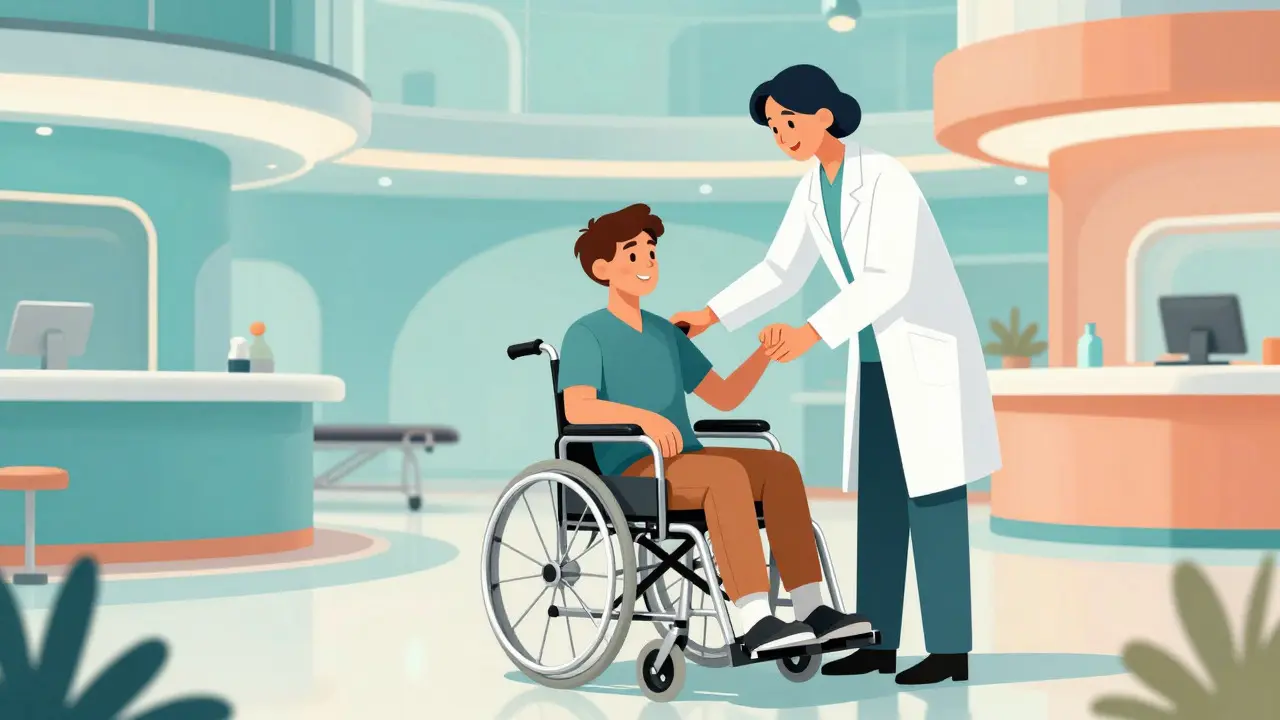
Imagine losing the ability to feel your legs or move your arms in an instant. For the roughly 17,800 people who suffer a new Spinal Cord Injury (SCI) each year in the United States, this is not a hypothetical scenario-it is their reality. With over 302,000 individuals currently living with SCI as of 2023, the impact on daily life is profound. But here is the crucial part: while the damage to the spinal cord may be permanent, the journey toward independence does not end at diagnosis. Modern medicine has shifted from merely keeping patients alive to actively helping them regain function, manage complications, and reintegrate into society.
You might wonder if recovery is even possible. The answer depends heavily on the severity and level of the injury, but the potential for improvement is real. Rehabilitation programs are no longer just about bed rest; they are intensive, multidisciplinary efforts designed to maximize every ounce of remaining neurological capacity. Whether you are a patient, a family member, or a caregiver, understanding the landscape of function loss, rehab protocols, and assistive technology is the first step toward navigating this complex path.
Understanding Function Loss: It’s Not Just About Walking
When we talk about spinal cord injuries, the immediate image that comes to mind is paralysis. However, function loss extends far beyond mobility. The spinal cord is the superhighway for nerve signals between your brain and the rest of your body. When that highway is damaged, communication breaks down below the level of the injury. This results in three primary types of loss: motor, sensory, and autonomic.
Motor loss means muscles don’t receive the command to contract. If the injury is at the cervical level (neck), it affects the arms, hands, chest, and legs. Injuries at the thoracic or lumbar levels typically spare the arms but affect the trunk and legs. Sensory loss involves the inability to feel touch, pain, temperature, or position. This is dangerous because you can injure yourself without feeling it-like burning your hand on a stove or developing a pressure sore on your hip.
The third type, autonomic dysfunction, is often the most overlooked but equally critical. Your autonomic nervous system controls involuntary functions like blood pressure, heart rate, digestion, and bladder control. After an SCI, these systems go haywire. You might experience neurogenic shock, where blood pressure drops dangerously low, or autonomic dysreflexia, a potentially life-threatening spike in blood pressure triggered by a full bladder or bowel. Understanding these mechanisms is vital because managing them is often more urgent than learning to walk again.
| Injury Level | Functional Impact | Primary Assistive Needs |
|---|---|---|
| C1-C4 (High Cervical) | Loss of arm/hand function; requires ventilator support in many cases | Environmental control units, diaphragm pacing, power wheelchair |
| C5-C6 (Low Cervical) | Some shoulder/bicep movement; limited wrist extension | Lightweight manual wheelchair with rim projections, adaptive tools |
| T1-L1 (Thoracic) | Full arm/hand use; loss of trunk stability and leg function | Standard manual wheelchair, standing frames, transfer boards |
| L2-S1 (Lumbar/Sacral) | Preserved trunk/arm function; varying leg weakness | Ankle-foot orthoses (AFOs), walkers, crutches |
The Golden Window: Acute and Subacute Rehabilitation
Time is tissue, but in SCI rehab, time is also opportunity. The most significant functional gains occur within the first year post-injury, particularly for those with incomplete injuries. According to data from the Spinal Cord Injury Model Systems, individuals with incomplete injuries can achieve 80-90% of their functional potential within that first 12 months. This is why rehabilitation begins almost immediately-often within 24 to 72 hours of medical stabilization.
The acute phase isn't about walking yet. It’s about survival and prevention. During the initial 6-12 weeks, the focus is on preventing secondary complications that could sideline progress permanently. These include muscle contractures (where muscles shorten and stiffen), pressure ulcers (bedsores), and respiratory issues. Physical therapists perform passive range of motion (ROM) exercises daily. If you have spasticity-a common reflex where muscles tighten involuntarily-these exercises need to happen two to three times a day to keep joints flexible.
As you move into the subacute phase, the intensity ramps up. Comprehensive inpatient programs require a minimum of three hours of therapy five days a week. This isn't just physical therapy; it's a team effort involving occupational therapists, neuropsychologists, speech-language pathologists, and social workers. They work together to teach you how to eat, dress, bathe, and manage your bowel and bladder using adaptive techniques. The goal is independence in Activities of Daily Living (ADLs). For example, an occupational therapist might teach you how to use a button hook to get dressed or how to modify your home environment to make it accessible.
Technology in Motion: From Exoskeletons to Electrical Stimulation
Gone are the days when rehab meant only manual exercises. Today, technology plays a starring role in restoring function and improving quality of life. Two major technological interventions are changing the game: Functional Electrical Stimulation (FES) and robotic exoskeletons.
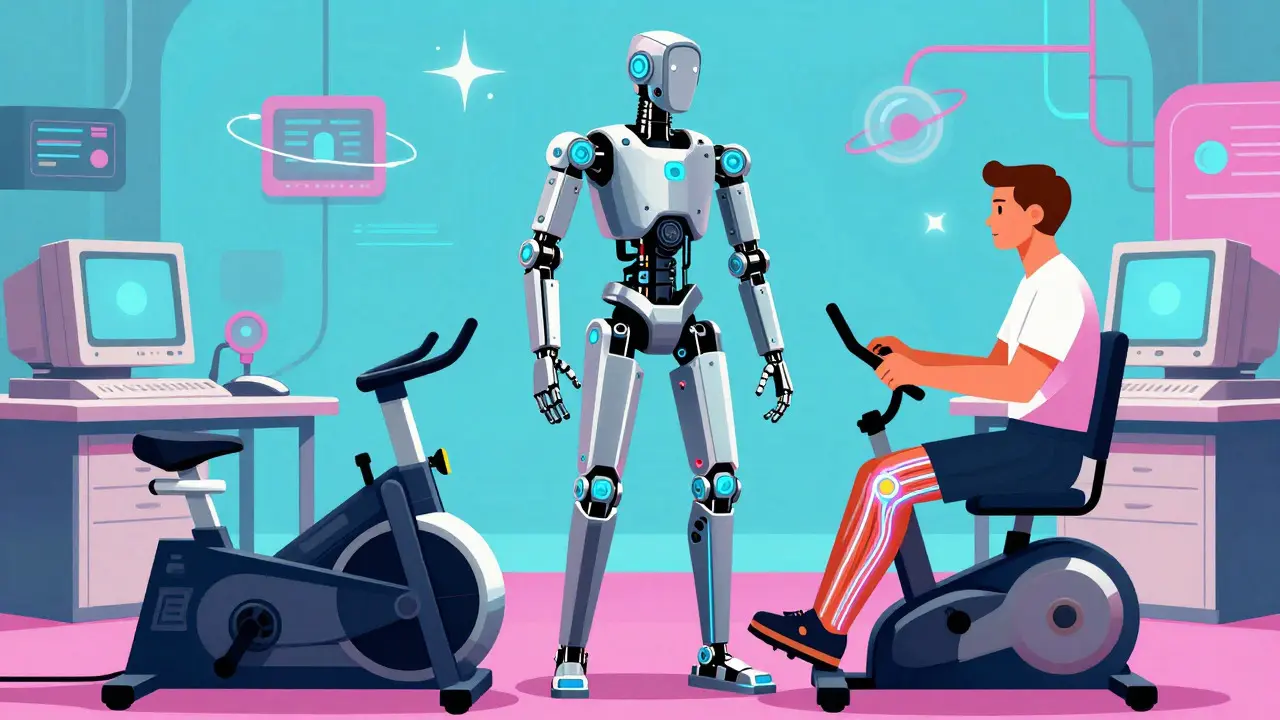
Functional Electrical Stimulation (FES) uses electrical currents to activate nerves and muscles. Imagine wearing a device that zaps your leg muscles in a rhythmic pattern, forcing them to contract as if you were pedaling a bike. FES cycle ergometry is widely used because it provides cardiovascular benefits that traditional arm cycling cannot match. A systematic review in the *Journal of Neurotrauma* found that FES cycling increased peak oxygen consumption by 14.3% in SCI patients, compared to just 5.2% with conventional arm cycling. This matters because heart disease is a leading cause of death in the SCI population due to reduced physical activity.
Then there are robotic exoskeletons like Ekso and ReWalk. These wearable robots allow users with paraplegia to stand and take steps. While they don’t cure paralysis, they offer profound psychological and physiological benefits. Standing improves bone density, reduces spasticity, and helps with bowel and bladder emptying. More importantly, it restores a sense of normalcy. Being able to look someone in the eye while standing, rather than looking up from a chair, changes social dynamics. However, these devices are resource-intensive. They require two to three therapists to operate safely and limit training sessions to 30-45 minutes due to high energy expenditure. Plus, the cost is steep, and insurance coverage remains inconsistent.
Another emerging tool is the Tethered Pelvic Assist Device (TPAD), developed at Columbia University. It enhances balance training by providing pelvic feedback, which is crucial for relearning how to shift weight and maintain stability. As AI-driven therapy planning becomes more common, expect these technologies to become more personalized, adapting to your specific neural responses in real-time.
Navigating Autonomic Challenges: Bowel, Bladder, and Spasticity
If mobility grabs the headlines, autonomic management keeps you out of the hospital. Managing neurogenic bowel and bladder is a daily reality for most SCI survivors, consuming 45-90 minutes of your day. Ignoring it leads to infections, kidney damage, and social isolation.
For bladder management, options range from intermittent catheterization to indwelling catheters. Intermittent catheterization is generally preferred because it mimics natural voiding patterns and reduces infection risk. It requires discipline and hygiene, but it offers greater freedom. Bowel programs involve scheduled routines using suppositories, digital stimulation, or medications to trigger regular evacuations. Consistency is key-your body needs a predictable schedule to function.
Spasticity affects 65-78% of people with SCI. It’s not always bad; some mild spasticity can help with transfers or standing. But when it becomes painful or interferes with sleep and care, it needs treatment. Dr. John Doe from Mayo Clinic notes that individualized plans combining oral medications like baclofen with targeted botulinum toxin injections can reduce spasticity scores by 40-60% in most patients. The goal isn’t to eliminate all tone but to find a manageable balance.
Assistive Devices: Building Your Toolkit for Independence
Your wheelchair is more than transportation; it’s your primary interface with the world. Choosing the right one is critical. A standard manual wheelchair might suffice for short distances, but a lightweight, ultralight, or active-user chair can prevent shoulder injuries and increase speed. Custom seating systems, which can cost $1,200-$3,500 out-of-pocket after Medicare coverage, are essential for posture and skin integrity. Don’t skimp here-poor seating leads to pressure sores, which are painful, expensive to treat, and sometimes fatal.
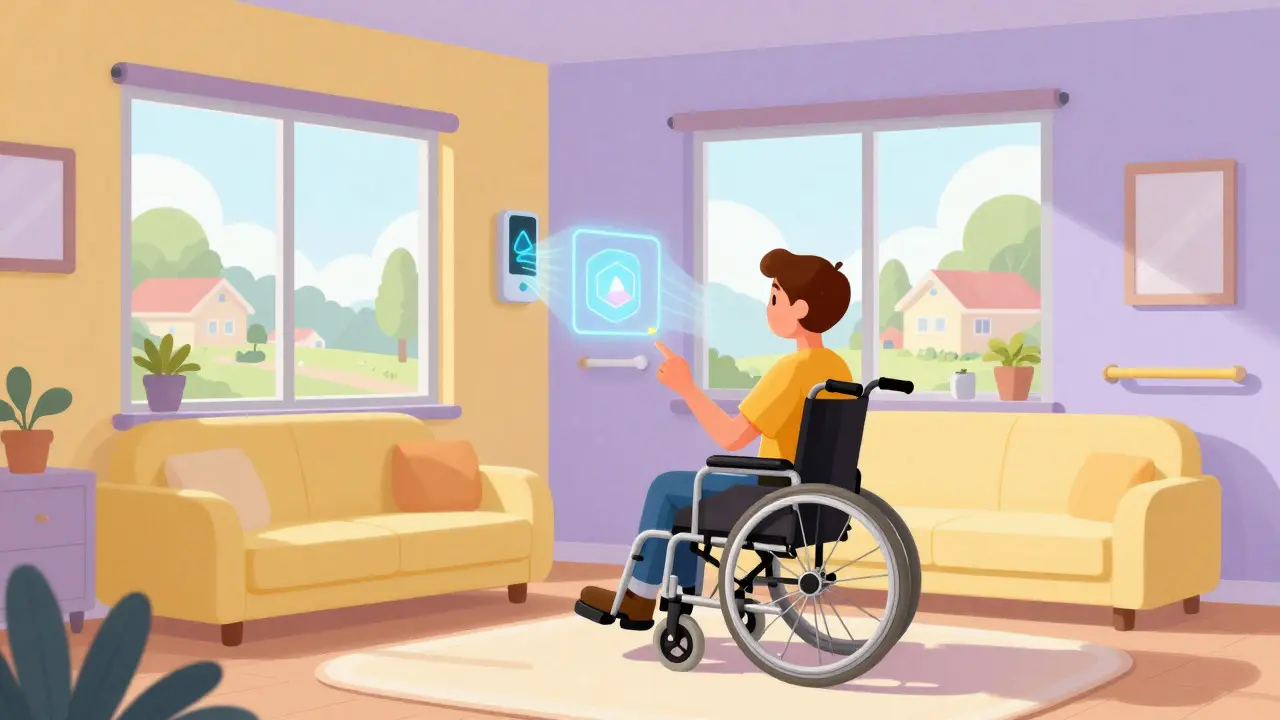
Beyond wheelchairs, consider environmental control units (ECUs) for those with high-level cervical injuries. ECUs allow you to control lights, doors, phones, and TVs using switches operated by head movements, eye gaze, or sip-and-puff mechanisms. For community mobility, power-assisted wheels add electric boost to manual chairs, making hills and long distances manageable. And for home safety, grab bars, ramps, and voice-controlled smart home devices can transform a barrier-filled house into an accessible sanctuary.
The Human Element: Support, Psychology, and Long-Term Outlook
Rehabilitation is physically demanding, but the mental toll is often heavier. Depression and anxiety are common after SCI. That’s why comprehensive programs include neuropsychologists and peer counselors. Data from Spaulding Rehabilitation shows that 82% of patients report significantly improved adjustment when connected with peer mentors-people who have walked the same path. Hearing someone say, "I was where you are, and here’s how I got through," is powerful medicine.
Long-term success also depends on community reintegration. Outpatient programs typically continue for 3-6 months post-discharge, focusing on vocational training, driving adaptations, and sexual health. The market for SCI services is growing, valued at $1.87 billion in 2023, reflecting increased survival rates and demand for quality care. However, funding gaps remain. Medicare covers only 80% of wheelchair costs, and reimbursement rates for rehab centers often fall short of actual expenses. Advocacy groups like the Christopher & Dana Reeve Foundation and United Spinal Association play vital roles in bridging these gaps and pushing for policy changes.
Looking ahead, the future is promising. Brain-computer interfaces are showing early signs of restoring hand function in cervical injuries. Implantable diaphragm pacing systems are reducing ventilator dependence. As these technologies mature, the definition of "recovery" will expand further. But for now, the best outcomes come from a combination of aggressive early rehab, smart use of assistive devices, and a strong support network. You’re not alone in this journey, and with the right tools and mindset, independence is achievable.
How long does spinal cord injury rehabilitation last?
Inpatient rehabilitation typically lasts 6-12 weeks, starting within 24-72 hours of medical stabilization. However, recovery is a lifelong process. Outpatient therapy often continues for several months, and many individuals engage in maintenance exercises indefinitely to preserve function and prevent complications.
Can you walk again after a spinal cord injury?
It depends on the completeness and level of the injury. Approximately 59% of individuals with incomplete paraplegia regain ambulatory function, compared to only 1-3% of those with complete paraplegia. Robotic exoskeletons and treadmill training can improve walking ability and endurance, even if independent community walking isn't achieved.
What is the most important complication to prevent after SCI?
Pressure ulcers (bedsores) and urinary tract infections are among the most serious. Pressure ulcers can develop rapidly if weight isn't shifted regularly. Preventing them requires proper seating, frequent weight shifts, and meticulous skin checks. UTIs are managed through consistent bladder programs like intermittent catheterization.
Does insurance cover exoskeletons and advanced rehab tech?
Coverage varies widely. Medicare and private insurers may cover some components of rehab, such as FES cycling during inpatient stays, but often exclude expensive devices like exoskeletons for home use. Many patients face significant out-of-pocket costs, ranging from thousands to tens of thousands of dollars. Advocacy and prior authorization are often necessary.
How do I manage spasticity at home?
Daily stretching, proper positioning, and avoiding triggers like tight clothing or full bladders can help. Medications like baclofen or tizanidine are commonly prescribed. For severe cases, botulinum toxin injections or intrathecal baclofen pumps may be recommended. Always consult your physiatrist before adjusting any medication regimen.