Recent POST





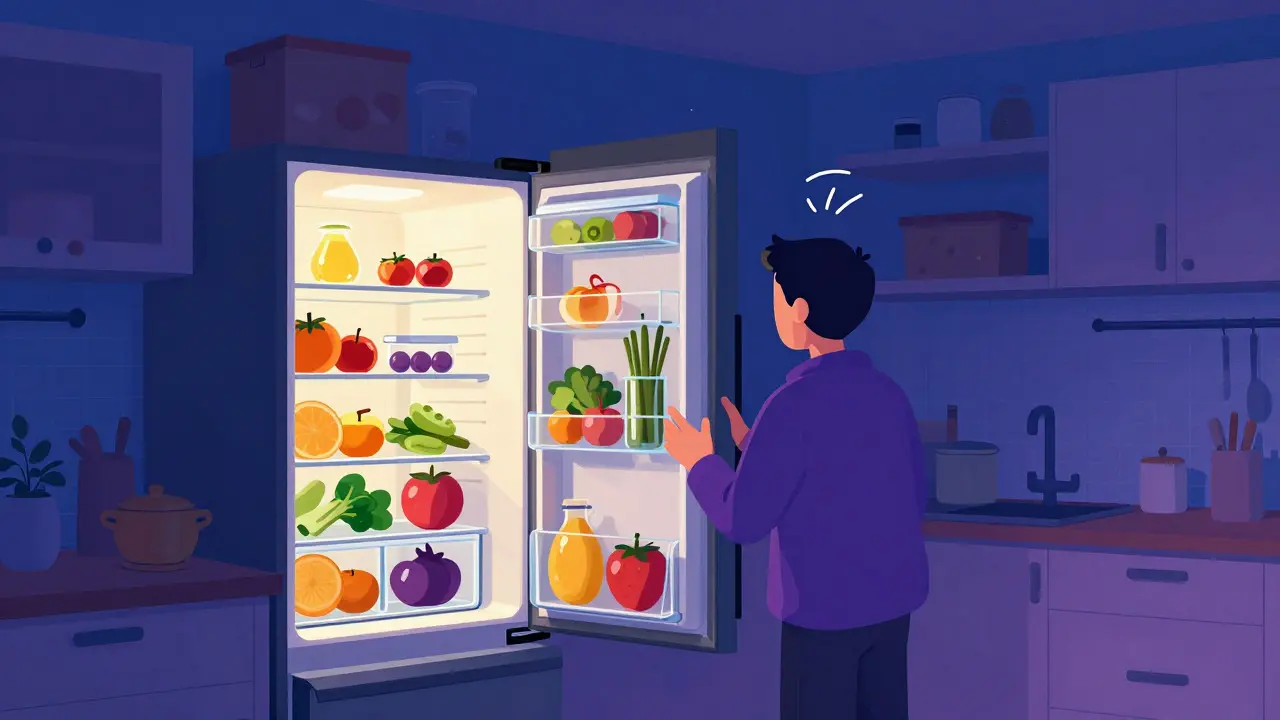
You know that feeling when you open the fridge at 10 PM and grab a handful of cookies without really thinking about it? That’s not a willpower failure. It’s your environment doing its job. Your home food environment-the physical layout, what’s visible, and how meals are served-shapes your eating habits more than any diet plan you can memorize. Research shows that where you keep food and how you prepare it can determine whether you hit your weight goals or slip back into old patterns within weeks.
Most adults eat 70-80% of their meals at home, according to a comprehensive NIH-funded study published in 2021. That means your kitchen isn’t just a room; it’s the primary stage for your daily nutritional choices. If your setup fights against your health goals, you’re constantly battling invisible triggers. But if you design your space to make healthy choices the easy, default option, you stop relying on mental discipline and start benefiting from automatic behavior. This guide breaks down exactly how to restructure your home to support sustainable weight loss, based on clinical data and practical implementation strategies used by dietitians and health coaches.
Why Your Kitchen Layout Matters More Than Your Diet Plan
We often think of weight management as a battle between us and our cravings. But behavioral scientists tell a different story. Dr. David Levitsky, a professor of nutritional sciences at Cornell University, explains that our environment creates automatic triggers. "Your environment is crucial... research shows that the foods we keep around us can influence what-and how much-we eat," he notes. It’s not about being weak-willed; it’s about how human brains process visual cues.
The concept of the 'food environment' emerged from public health nutrition research in the early 2000s, with foundational work by researchers Larson and Story who developed the first comprehensive framework for understanding these dynamics. Current evidence supports this approach strongly. The 2021 NIH study found that individuals with optimized home food environments were 3.2 times more likely to meet fruit and vegetable intake guidelines. Even more striking, they had 28% lower odds of being overweight or obese compared to those living in less supportive environments.
Think of it like traffic control. If you want cars to go left, you don’t just tell them to go left; you build the road so going left is the only easy path. Your kitchen should work the same way. When healthy options are visible, accessible, and pre-prepared, your brain doesn’t have to engage in a complex decision-making process every time hunger strikes. It simply takes the path of least resistance. This reduces what psychologists call 'decision fatigue,' allowing you to conserve mental energy for other parts of your life while still making good nutritional choices.
The Science of Placement: Where to Put What
Placement isn't just about tidiness; it's a strategic tool. The NIH study identified specific spatial requirements that significantly impact dietary outcomes. One key finding was that food placement had the strongest association with fruit and vegetable intake, with a statistical beta coefficient of 0.47. In plain English, where you put food matters more than almost any other single factor in your kitchen.
UCSF Health’s behavior modification guidelines provide precise instructions for this. They recommend placing healthy snacks within 12 inches of the primary refrigerator door handles. Why 12 inches? Because that’s the natural reach zone when you open the fridge. If the first thing you see and grab is cut carrots or berries, that’s what you’ll eat. Conversely, less healthy options should be stored on high shelves or in opaque containers that require deliberate effort to access. Every extra second of friction added to grabbing a treat reduces the likelihood of impulsive snacking.
Here’s a simple breakdown of effective placement strategies:
- Fruits and Vegetables: Place them at counter level or eye level in clear bowls. A 2023 analysis by the Nutrition Coaching Center found that placing fruits at counter level increased consumption by 23%. Visibility drives appetite.
- Pre-cut Veggies: Store these at eye level in the refrigerator. Clinical observations from Prime Health MD in 2022 showed this resulted in 17% higher vegetable intake among patients.
- Salty Snacks and Sweets: Move these out of common areas entirely. The Mayo Clinic’s 2022 framework recommends removing 100% of visible unhealthy snack options from the kitchen and living room. Their research showed this simple intervention reduced unplanned snacking by 42%.
- Beverages: Keep water bottles and herbal teas at eye level. Hide sugary sodas and juices in the back of the pantry or in opaque containers.
Don’t underestimate the power of sight lines. If you walk past a bowl of chips on the coffee table, you’re engaging with a cue. If you walk past a bowl of almonds, you’re engaging with a different cue. Change the cue, change the behavior.
Meal Prep and Container Strategies
It’s not enough to have healthy food available; it needs to be ready to eat. If you have to chop, wash, and cook before you can eat a salad, you’re unlikely to do it after a long day. This is where meal prep and container choice come in.
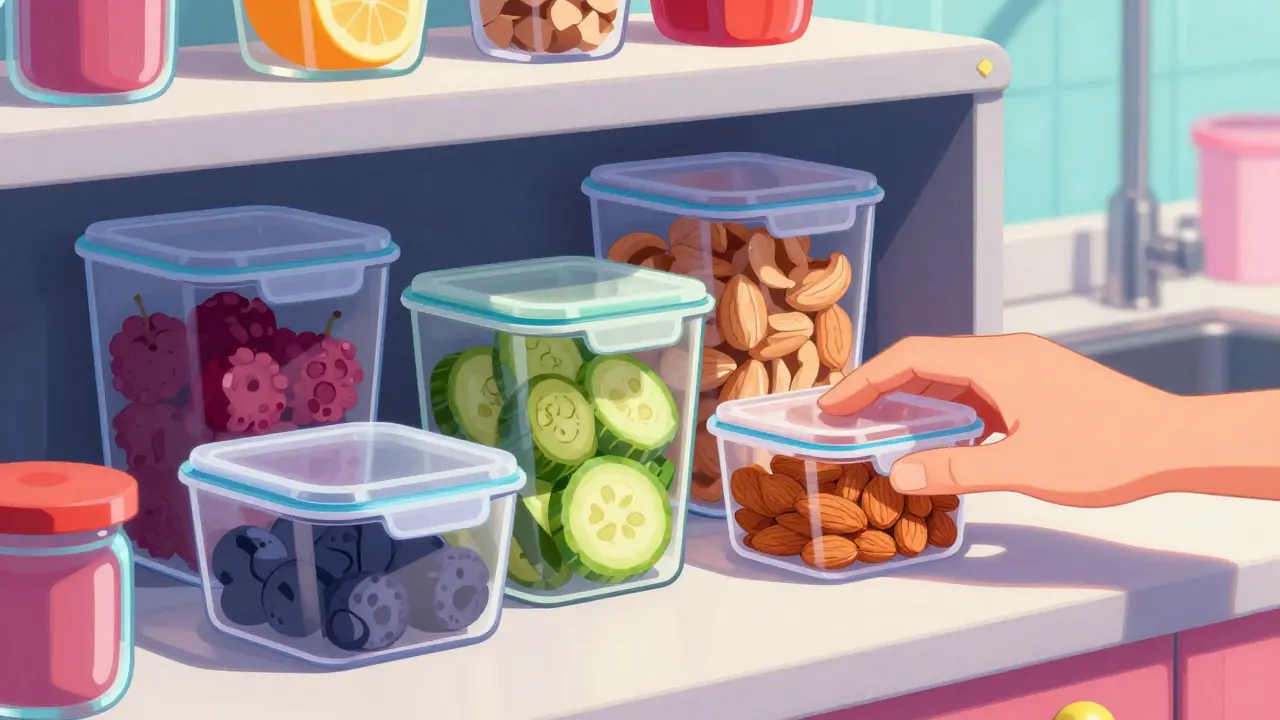
Using clear glass containers for meal prep is a game-changer. Truemade’s 2023 consumer study reported that users who switched to clear containers reduced food waste by 31%. Why? Because you can see what you have. Opaque Tupperware leads to forgotten leftovers rotting in the back of the fridge. Clear containers act as a visual inventory, reminding you that a healthy meal is already prepared and waiting.
Consider creating a designated 'snack station.' This could be a small shelf or drawer dedicated to pre-portioned healthy snacks. For example, portion out 1/4 cup of nuts or 1/2 cup of berries into individual bags or small containers. Truemade’s research found that this strategy reduced decision fatigue by 63%. When hunger hits, you don’t have to weigh options; you just grab a pre-made packet. It took an average of only 28 minutes per week to maintain this system, yet it saved users 2.4 hours weekly on meal decisions overall.
Here’s a comparison of how different preparation methods affect adherence:
| Strategy | Time Investment (Weekly) | Adherence Rate | Key Benefit |
|---|---|---|---|
| No Prep / Raw Ingredients Only | Low | ~42% | Flexibility, but high reliance on willpower |
| Batch Cooking (Opaque Containers) | Medium (3-5 hrs) | ~55% | Convenience, but hidden food leads to waste |
| Clear Container Prep + Portioning | Medium (2-3 hrs) | ~68% | Visual cues reduce impulse eating, saves time |
| Full Snack Station System | Low (28 mins) | ~89% | Eliminates decision fatigue, highest consistency |
Note that the high adherence rate for the full snack station system comes from implementing no more than three changes simultaneously. Trying to overhaul your entire lifestyle at once is a recipe for burnout. Start small, build the habit, then expand.
Social Dynamics and Eating Habits
Your home food environment isn’t just physical; it’s social. Who you eat with and what you do while eating significantly impacts how much you consume. The NIH study highlighted a critical finding: family eating while watching TV increased the odds of overweight or obesity by 47%. This isn’t just anecdotal; it’s a robust statistical correlation.
Why does TV matter? Because it distracts you from internal satiety signals. When you’re focused on a show, you forget to stop eating when you’re full. UCSF Health’s guidelines are blunt about this: "Eat only while sitting down at the kitchen or dining room table. Do not eat while watching television, reading, cooking, talking on the phone, standing at the refrigerator or working on the computer."
If you live alone, this is easier. If you live with family or partners, it requires negotiation. You might need to designate specific 'screen-free' times for meals. Even a 30-minute window where everyone puts devices away can reset the household norm. Dr. Natalie, a registered dietitian, notes that an orderly kitchen creates "instant gratification of calm and peace," which directly impacts food choices. A chaotic, distracting environment promotes chaotic, distracted eating.
Modeling behavior is also key. If children see parents reaching for fruit instead of candy, they mimic that behavior. If parents hide vegetables in the back of the fridge, children learn that vegetables are secondary. Make healthy choices visible and normal. Involve family members in meal planning; JM Nutrition’s 2023 clinical data showed that involving family in the process increases success rates by 57%.

A Step-by-Step Implementation Guide
Ready to start? Don’t try to do everything at once. Follow this phased approach, which aligns with protocols from the Mayo Clinic and UCSF Health.
- Phase 1: The Purge (Days 1-3)
Set aside 1.5 to 2.7 hours to go through your kitchen. Remove all non-supportive foods. Donate, compost, or toss anything that doesn’t fit your goals. This is the hardest part emotionally, but the most impactful physically. Once it’s gone, you can’t eat it. - Phase 2: Spatial Reorganization (Week 1)
Spend 3-5 hours rearranging your kitchen. Put healthy foods in prime spots (eye level, front of fridge). Move treats to hard-to-reach places. Set up your clear containers and fill them with pre-prepped meals. Create your snack station with pre-portioned items. - Phase 3: Habit Integration (Weeks 2-4)
Focus on the social aspect. Establish screen-free meal times. Stick to the new layout. Expect some friction initially. New habits take 2-4 weeks to become automatic. During this time, maintenance only requires 12-17 minutes daily for optimal food placement (e.g., washing and refilling fruit bowls).
Common pitfalls to avoid include trying to change too many things at once. If you purge the pantry, reorganize the fridge, AND start a strict screen-free rule all in one week, you’re likely to revert. Pick two or three changes, master them, then add more. Also, remember that perfection isn’t the goal. Consistency is. If you slip up and eat a cookie from the hidden box, don’t quit. Just put it back and continue with the next healthy choice.
Frequently Asked Questions
How long does it take to see results from changing my home food environment?
You’ll notice immediate changes in convenience and decision fatigue within the first week. However, behavioral shifts typically take 2-4 weeks to become automatic. Clinical data suggests that significant improvements in dietary quality and weight trends emerge after 4-8 weeks of consistent environmental support. Patience is key; the environment works quietly in the background.
What if I live with people who don’t share my weight goals?
This is a common challenge. Focus on controlling your own access points. Use separate containers for your pre-prepped meals. Negotiate shared spaces, like the main fridge shelf, but keep your personal snacks in a designated area. Modeling behavior is powerful; often, housemates will naturally gravitate toward the healthier, more convenient options you’ve set up. Involve them in meal planning to increase buy-in.
Do I need to buy special containers or tools?
No, but clear glass or plastic containers are highly recommended over opaque ones. They improve visibility and reduce waste. You don’t need expensive gadgets. Simple items like clear storage bins, portion-control bags, and a few nice bowls for fruit display are sufficient. The focus should be on organization, not equipment.
Is it okay to keep some treats in the house?
Yes, but they should be de-prioritized. Keep them in opaque containers on high shelves or in the back of the pantry. The goal isn’t elimination, but reducing their accessibility and visibility. This adds friction to impulsive eating while still allowing for occasional enjoyment without guilt. If you find yourself constantly craving a specific treat, consider replacing it with a healthier alternative that satisfies the same texture or flavor profile.
How do I maintain this system over time?
Maintenance takes only 12-17 minutes daily. This includes washing and refilling fruit bowls, checking the snack station, and ensuring the fridge stays organized. Weekly, spend about 30 minutes on meal prep and restocking. Think of it like brushing your teeth-a small, regular habit that prevents major problems. If you let the kitchen get messy again, the cues will return, and so will the old behaviors.